Oleksandr Syrskyi Reflects on the 2022 Kharkiv Offensive, 2024 Lessons, and Ukraine’s Air Defense Status

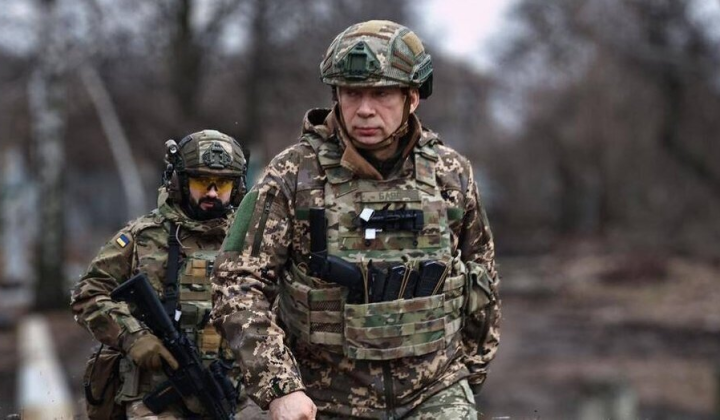
Interview with Oleksandr Syrskyi
According to Radiotrek — Світ: On September 27, 2026, at 1:40 PM, an in-depth conversation with Oleksandr Syrskyi was released, shedding light on the 2022 Kharkiv offensive, its operational insights applied in 2024, the current state of Ukraine’s air defense system, the effectiveness of assault troops, and collaboration with allied nations. Early August 2022 saw the Ukrainian Armed Forces focused on the Kherson front. Syrskyi recalled,
“The president contacted me and asked to prepare an offensive near Horlivka with the forces we had.”
However, Syrskyi proposed redirecting the operation toward the Kharkiv region, specifically near Balakliia.
The objective was to breach enemy lines and advance 65-70 kilometers to the right bank of the Oskil River, liberating approximately 3,000 square kilometers and about 120 settlements. Yet, by August 29, 2022, as troop redeployment was concluding, ammunition shortages became critical. Syrskyi highlighted,
“Artillery was responsible for around 80% of all damage, but we had so few shells that for every 12-15 enemy rounds, we could only respond with one.”
This prompted the president to prioritize securing ammunition for the offensive. Only five officers and generals were involved in planning, and commanders received precise orders only when their units were already moving to assembly areas.
Advancement of the Offensive
The first day saw Ukrainian forces break through defenses and push forward 19 kilometers, followed by a 29-kilometer gain on day two. By the third day, troops reached the Oskil River bank. On the fifth day, the 92nd Brigade advanced toward Kupiansk while other units encircled Izium. Syrskyi noted that the tactics from the Kharkiv operation were replicated multiple times, including during 2024 maneuvers in Kursk Oblast. “The same principles applied: advancing with armored vehicles, bypassing strongpoints, and pushing deep into enemy territory,” he emphasized.
By 2026, Ukraine was finalizing the development of a domestic missile system designed to counter hostile aircraft and cruise missiles, with final tests underway. Syrskyi stated,
“It’s just a matter of one to two months; the last rounds of trials are happening now.”
He also mentioned delays in acquiring light aircraft for drone countermeasures, but progress has resumed. “We also require a large number of MANPADS as a relatively cost-effective way to combat drones, alongside upgrading conventional weaponry,” Syrskyi added.
Regarding assault troops, Syrskyi praised their sustained effectiveness over nearly three years, enabling offensive operations and preventing territorial losses. He explained that these forces relieved airborne assault units, which had previously been tasked with covering all critical sectors. Toward the end of 2025 and into early 2026, military representatives from partner countries like the UK and France began studying Ukraine's combat experience firsthand. “Where once they trained our soldiers, now they come to learn from us,” Syrskyi remarked. He further stressed Ukraine’s pivotal role in deterring Russian aggression against NATO countries, noting that despite Russian plans for further aggression, their forces suffer heavy losses on the front lines according to intelligence.
This interview with Oleksandr Syrskyi highlights the crucial role of adaptive strategy and operational flexibility amid shifting front-line realities. The experience gained during the Kharkiv offensive laid the groundwork for subsequent advances, demonstrating the Ukrainian Armed Forces’ ability to respond swiftly to battlefield challenges. Additionally, the emphasis on international cooperation underscores the global significance of Ukraine’s defense efforts and how shared expertise can shape the outcomes of military campaigns.

Read also