Radiation Belt Particle Motion: Spacecraft Data May Have Led Scientists Astray for Decades

A Fresh Perspective Is Required
According to НВ — Техно: Data collected by spacecraft over several decades may have given researchers a distorted view of how particles move inside Earth's radiation belts. A collaboration involving the University of Birmingham, the University of Helsinki, and the Czech Academy of Sciences has found that readings from space probes can easily be misinterpreted. Because instruments have limited resolution, they miss fine-scale structures, so an organized particle flow can appear to be random scattering. These radiation belts, trapped by the planet's magnetic field and populated by high-energy particles, are central to space weather, and misreading their behavior has significant implications for satellite safety and mission planning.
The Hazards Posed by Radiation Belts
For satellites, the radiation belts are a serious threat: they can disrupt communications and complicate space missions. In the past, researchers often attributed observed particle patterns to diffusion. The new findings, however, demonstrate that a diffusion-like signal can emerge even when no real diffusion is taking place. As groups of charged particles travel through the magnetic field at different velocities, their coherent structure gets stretched and tangled, creating the appearance of randomness.
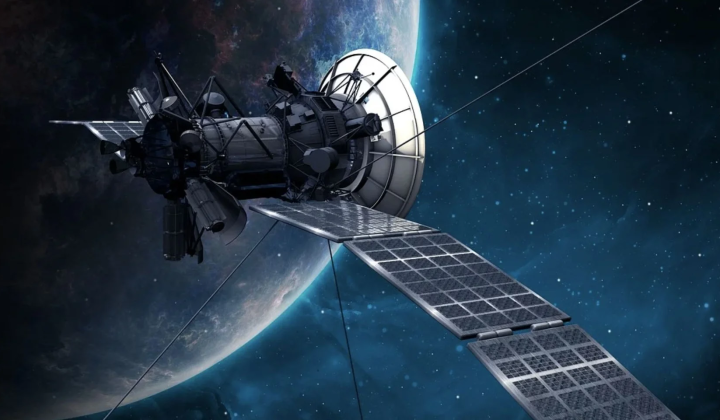
A single spacecraft sees only a smoothed version of this intricate behavior. Its instruments cannot resolve every small detail, so the data may be insufficient to reveal which physical mechanism produced the pattern. Also, one probe cannot reliably distinguish spatial variations from changes that occur over time. That is why the research team recommends operating constellations of satellites that can monitor the same particle population simultaneously from multiple vantage points.
This work could prompt a rethink of how radiation-belt observations from the past few decades have been interpreted. The study's lead author is Adnane Osmane, and it was published on August 13, 2026. The hope is that newer observational strategies will yield sharper, more reliable pictures of particle motion in the belts and clarify the underlying physics.
This research may fundamentally alter our understanding of the physical processes at work in Earth's radiation belts.
If teams of satellites are deployed to observe radiation belts from multiple positions, scientists could acquire the detailed data needed to design better protection for spacecraft facing hazardous radiation conditions. In turn, these advances could shape future exploration missions and the evolution of space-based technologies.
Understanding the dynamics of Earth's radiation belts is crucial, especially in light of recent advancements in satellite technology. As researchers uncover new methods for analyzing particle behavior, the development of techniques to detect nuclear weapons on satellites highlights the growing importance of accurate data interpretation in space science. These innovations not only enhance our understanding of space weather but also have significant implications for global security.

Read also