Storks Nest on Power Lines: How Energy Workers in Dnipropetrovsk Region Are Saving the Birds

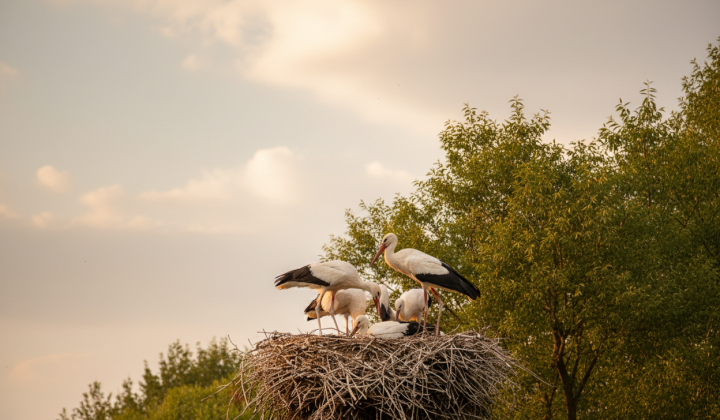
Storks Nesting on Power Lines in Ukraine
According to Главком: In Ukraine, storks are increasingly choosing electricity pylons as nesting sites, a trend that poses significant risks to both the birds and public safety. This phenomenon has become more common over the last decade, particularly in villages like Grechane in the Dnipropetrovsk region. Nests built on these structures can be lethally dangerous, as their weight sometimes reaches hundreds of kilograms. To prevent accidents, energy companies and specialists are installing metal platforms and carefully relocating the nests onto them.
Olena Potapenko noted that 'roof designs on houses have changed, leaving fewer traditional nesting spots, so storks have moved to power lines.' This confirms an observable trend where individual stork pairs return to their nests year after year, continually expanding them. In Dnipropetrovsk region, a special project has already successfully secured over 270 such nests, highlighting the scale of the issue and the proactive response from responsible organizations. This situation reflects a broader adaptation of wildlife to human-altered landscapes.
Safety Incidents and Protective Measures
Petro Pleis recounted incidents where storks came into contact with live wires:
'About three years ago... we had to remove one from a 10 kV line. A stork got caught there.'
When necessary, the nest is compactly removed, and specialists secure it on a new platform, maintaining a safe clearance of 60-70 cm from the power lines. Such work is typically suspended from April onward due to the start of the nesting season to avoid disturbing the birds.
A notable example is the well-known stork nest in the village of Leliaky, Pyriatyn community, where a new pair of birds, named Lel and Kvitka, has settled. This demonstrates the continuation of traditional stork nesting in Ukraine, despite significant changes in their habits and habitat.
The growing number of stork nests on power infrastructure may signal broader environmental shifts, particularly a reduction in natural nesting territories. This underscores the importance of monitoring bird populations and implementing protective measures. Addressing the issue of nesting on pylons requires a comprehensive approach, involving cooperation between conservation groups and energy companies to ensure both ecological and electrical safety.
In light of the increasing risks that storks face due to their nesting habits on power lines, it's crucial to explore the proactive measures being taken by energy companies. For instance, DTEK's initiatives to install nesting platforms on power poles highlight a significant effort to protect these birds from electrocution, ensuring their safety while adapting to changing environments.

Read also