Ukrainian Boxer Vasyl Lomachenko Faces Backlash for May 9 Victory Day Greeting to Russians

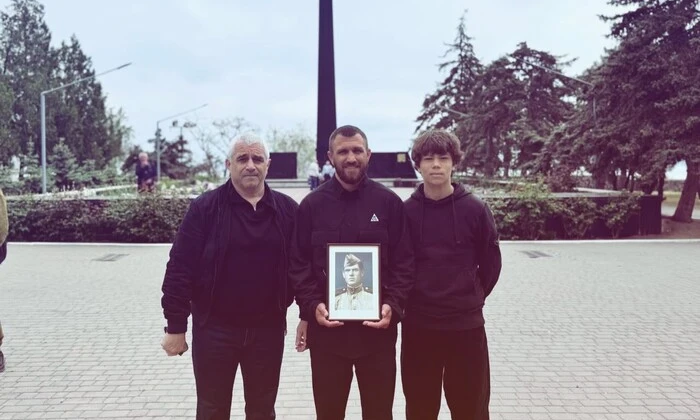
Vasyl Lomachenko’s Controversial Victory Day Message
According to Главком: Ukrainian boxer Vasyl Lomachenko sparked a heated reaction online after posting a greeting on his Facebook page on May 9. The message, written in Russian, congratulated everyone on what Russia calls Victory Day. This has created tension in Ukraine, where May 8 is observed as the Day of Remembrance and Victory over Nazism in World War II, and May 9 is celebrated as Europe Day.
In his post, Lomachenko wrote:
“Christ is risen! Happy Great Victory Day! Happy holiday! We always remember and honor! Peace to all – Vasyl Lomachenko”
The boxer’s comments come in the wake of a 2024 incident where he addressed the shelling of a lyceum in Bilhorod-Dnistrovskyi but did not explicitly state that Russia was responsible for the attack.
Moscow’s Victory Day Parade
On May 9, Moscow held its annual Victory Day parade on Red Square, which lasted 45 minutes and featured no display of military hardware. For context, the 2025 parade ran approximately 1 hour and 9 minutes, while the 2024 parade was about 50 minutes long. In 2023, the 45-minute event was notably smaller than the 2020 anniversary parade, which lasted around 1 hour and 15 minutes.
The procession primarily consisted of foot columns made up of cadets and Russian army personnel.
Lomachenko’s post and the Moscow parade highlight the contrasting ways Ukraine and Russia commemorate World War II, reflecting differing political and social climates. On one hand, the Ukrainian boxer’s greeting has stirred outrage at home; on the other, the Kremlin’s scaled-back parade still aims to project military strength. These events serve as key indicators of how historical memory and ongoing conflicts continue to shape public sentiment in both nations.
The ongoing debate surrounding Victory Day celebrations reveals deeper historical narratives that have evolved from Soviet times to the present. To understand how these commemorative events have been reshaped by political agendas, explore the transformation of Victory Day from Stalin to Putin. This context sheds light on the contrasting sentiments expressed by figures like Lomachenko and the Kremlin's portrayal of military strength.

Read also