We struck the most protected nuclear facility of the Russian Federation - Valeriy Ryabyh

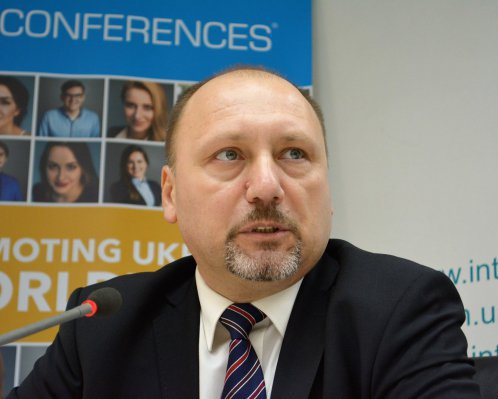
Ukraine is developing drones and repurposing Soviet ones, so it can and should further strike deep within Russian territory. Currently, we are one of the leading countries in drone manufacturing. The missiles that fell in Poland and the strikes on Ukrainian infrastructure in winter are pushing the USA to provide increasingly advanced weapon systems. Soon, we should receive one of the most expensive missile defense systems in the world - Patriot. It can intercept ballistic missiles. The war may end with Ukrainian victory and the liberation of Crimea by summer 2023, as leading politicians and military officials around the world suggest. Their calculations are based on data from Western research. This was stated by Valeriy Ryabyh, a weapons expert, in an interview with Gazeta.ua.
On December 5, Ukraine allegedly carried out attacks on military airfields deep inside Russia using Soviet repurposed drones Tу-141 'Strizh'. What is known about them?
There are many assumptions. Strangely enough, the first version about 'Strizh' was proposed by the Russians themselves. It's strange because it indicates their impulsiveness and failure in the information coverage of the war.
Let’s assume it was 'Strizh', but very modified. Theoretically, Ukraine could have done this. We have these aircraft, we assembled them from our spare parts, and our military knows how to operate them. A lot is also known about them in Russia. For a long time, both countries used them not for their intended purpose, but as training complexes.
The original Tу-141 had a lot of equipment needed 40 years ago for reconnaissance. It could have been replaced with about 100 kg of explosives.
This development dates back to the 1980s. Before being decommissioned, our military could have figured out that they could be used for other purposes. The original Tу-141 had a lot of equipment needed for reconnaissance 40 years ago, such as a film camera. All of it could have been replaced with about 100 kg of explosives. Add modern navigation positioning systems.
From video footage near the entrance of an apartment building in Engels, judging by the arrival, the attacking apparatus had a jet engine. This corresponds to the capabilities of 'Strizh'. However, I do not rule out that another drone could have been used. For example, an unknown kamikaze drone developed in Ukraine and equipped with a jet engine. We have the capabilities for this. Including the production of engines.
It could also have been a cruise missile. We also had developments in this regard. At one of the last exhibitions two years ago, the design bureau 'Yuzhne' presented a cruise missile 'Korshun' (based on the Soviet missile X-55, with a jet engine from 'Motor Sich', flying at ultra-low altitudes of up to 50 m, combat load mass - 480 kg, range up to 300 km Gazeta.ua).
If it was 'Strizh', it underwent a high degree of modification. The old apparatus managed to bypass all the air defense and missile defense of the aggressor country, hitting an object that is hardly more protected in Russia. The base of strategic bombers from the nuclear triad is strategic aviation, intercontinental ballistic missiles, and nuclear submarines carrying missiles. There is a very strict security regime at the facility.
Currently, Ukraine is one of the leading countries in the world in the development and manufacturing of drones, although this is not openly discussed.
Does Ukraine have the capacity to produce 'Strizh' or completely new analogs?
Currently, Ukraine is one of the leading countries in the world in developing and manufacturing drones. Although this is not overly discussed. Primarily, it concerns private developments. Many initiatives began with volunteer developments using available components. Gradually, diversity and quality increased.
The main factors for a drone are navigation, target acquisition, and a closed transmission and control system that is not affected by hostile radar warfare means. All these components allow the drone to bypass enemy air defense systems and reach the target. Judging by the photos of 'slightly damaged' bombers and the fact that during the attack three pilots who were supposed to control them died, we are talking about high drone efficiency.
Recently, there was news that our new drones with a flight range of up to 900 km have already been adopted by the Ukrainian Armed Forces. The air bases in Ryazan and Engels are located at a distance of 500-700 km. It refers to the development of the Ukrainian company AeroDrone and drones D-80 Discovery and E-300 Enterprise. They have received approval and will be supplied to the Armed Forces. These are drones similar to Iranian Shahed-136. Our drones also use gasoline engines. They can fly at a speed of about 120 km/h. This is not similar to what was used for the attacks in Engels. Nevertheless, there are our developments that are being certified and approved for operation. We may not know all developments at the moment.
The Minister of Defense, Oleksii Reznikov, reported on December 8 that in the past 30 days seven models of domestically produced drones have been approved for operation in the Armed Forces. This was before the attacks on December 5. The minister hinted that there could have been other developments. Currently, few of our weapon manufacturers are discussing their characteristics. This should be a surprise for the enemy. And the production itself should be protected from possible missile strikes. Some of our defense enterprises have already been relocated abroad.
Even if we do not have all the necessary components, Ukraine's position is quite different from what it was before February 24. Some Western countries were operating on inertia with Russia as a partner, and did not want to sell to us.
Now, the situation is different. Essentially, if we need components, there are no legal or bureaucratic obstacles to obtaining them. Therefore, for Ukraine, now practically everything is available without restrictions, including long-range weapons.
Do you think that previously Western countries were reluctant to give us weapons or their components to 'not provoke Russia'?
No. That's how bureaucracy works. For example, Western countries announced that they had imposed personal and sectoral sanctions against the Russian Federation for the annexation of Crimea and the war in Donbas. Part of those sanctions included military and dual-use components. Few speak about it, but the same sanctions reflected on us as well. Openly or covertly. We could not obtain any Western technologies and components until recently. The problem was not resolved for a long time.
The Russian Federation built testing grounds with equipment from Germany. Italy supplied military vehicles. The French provided matrices for the sights of Russian tanks.
Western partners proclaimed support for Ukraine. But when Ukrainian military importers approached them, we could not buy anything due to the sanctions regime. They did not want to sell to us, even though we asked. They were limited to humanitarian aid. At the same time, we conducted a project about Western countries violating sanctions when they sold military components to Russians without a shred of conscience.
As early as 2016, we wrote how the Russian Federation built testing grounds with equipment from Germany. Italy supplied military vehicles. The French supplied matrices for the sights of Russian T-72B3 tanks with which people were shot in northern Kyiv in spring. Ukrainians were not sold any of this. Now the situation is radically different in our favor.
ALSO READ: 'Russia will lose, but does not want to sign any peace agreement' Valentyn Krasnopirov
Can Ukraine carry out further strikes on Russian territory?
Not only can, but should. The fact that Russia strikes our infrastructure from its territory is born solely of impunity. Since 2014, experts have been talking about the need for deterrent weapons. To ensure that the adversary knows that there will be an adequate response to aggression. Such missiles as 'Hrom' fall under this. They were supposed to be developed, but Russian agents within our defense industry and government structures delayed the projects until the last minute.
Another leverage of deterrence is the development of special operations forces. I do not exclude their work on enemy territory in certain cases. Our Western partners indicated that our special forces were involved in the attack on one of the two aerodromes in Russia.
We have and will have long-range means available. If they do not want to supply us with American ATACMS missiles for HIMARS that can strike at 300 km, nothing prevents us from refining Ukrainian projects that allow us to strike distant targets threatening Ukraine.
The targets should be Russian command points that give commands to launch missiles.
Targets in Russia include their long-range aviation and naval bases that are also missile carriers, from which they strike at us. For every Russian strike, there should be our response. When they realize that nothing goes unpunished, their strikes will stop.
We need means to detect and destroy their drones and missiles before they launch. At the beginning of the invasion, they struck us from Belarus. And when dictator Alexander Lukashenko saw that he could receive a response, he stopped allowing it. The targets should be Russian command points that issue commands to launch missiles.
Russia does not fight by the rules accepted in the world.
Russia does not adhere to any accepted norms and principles of warfare. It operates outside international law and commits acts of genocide against us.
We struck the most protected nuclear facility of their triad, demonstrating Russia's vulnerability. We debunked their notions of modern and reliable air defense. They were struck, washed up, and silenced.
Russians were struck, washed up, and silenced.
They wanted to denazify us, destroy the country and the people. We witnessed acts of genocide in all occupied territories. If they had succeeded, few would talk about international law because victors are not judged. But thanks to the courage and resistance of the Ukrainian army and the people, they did not succeed. The Armed Forces are now dictating the terms.
German Die Welt reports that in a week we fire as many artillery shells as there are in the entire British army. Even the USA lacks them, hence they have to order production from private manufacturers, aside from the state ones. Is there a risk of ammunition hunger, and how might it affect operations?
Ammunition hunger concerns not only us but also the Russians. For them, it is even more acute because their entire tactic is built on a strategy of fire barrage, firing 40-60 thousand shells a day.
We and the Russians have different concepts of artillery use. Russians shoot not at targets but at areas. Shells fly somewhere in the direction of the enemy. Thanks to such strategy, it is possible to achieve an effect if you are fighting against an almost unarmed opponent.
This is a significant burden on logistics. For the Russians, it is primarily based on railway networks. Since Soviet times, they have been accustomed to supply wagon norms. That is why they attacked railway hubs such as Kupiansk and Debaltseve.
With the emergence of HIMARS weaponry that changed the rules of war, Russian artillery advantage disappeared.
With the advent of the weapon that changed the rules of war, the HIMARS systems, their advantage in artillery has vanished. Because at distances of up to 80 km, we were destroying their depots, command posts. They had to replan their supply chains. They had to transport shells by trucks. If we look at the statistics of Russian losses, a significant portion includes vehicles and fuel tankers.
Having lost a large amount of munitions and not being able to replenish them, they felt ammunition hunger earlier than we did. They were forced to search for ammunition everywhere from Belarus to North Korea. Thanks to HIMARS, we leveled their advantage in a greater number of barrels.
Now we are fighting with both old Soviet and NATO artillery.
Yes, now there are two types of artillery: the old Soviet 152 mm, whose supplies had previously begun to run out, and NATO standard 155 mm, for which projectiles are provided by partners. About 1 million shells have already been delivered. Of these, about 4,500 are high-precision. Since we hit targets precisely, we need much fewer munitions. The systems are newer and more technologically advanced, with quality targeting and fire adjustment.
We work as part of so-called 'combat triangles' that 'blind' the enemy.
We work as part of so-called 'combat triangles'. These are integrated reconnaissance, communication, and strike systems, as well as 'blinding' electronic warfare systems that allow for high-precision strikes on enemy warehouses, bases with personnel, and command posts. Accordingly, fewer shells are required, and there is less burden on logistics.
When talking about 'ammunition hunger', this is rather a shout into the future. Because all munitions are supplied from stockpiles that were hardly filled in the last 30 years since the collapse of the USSR. They are running out, which raises the issue of increasing production.
Currently, production in Western countries is being reorganized, doubling or tripling. There is a resumption of munitions production in Ukraine, as reported by NSDC Secretary Oleksiy Danilov. It has already begun. This includes thousands of shells of calibers 122 mm and 152 mm.
In some countries of the former Warsaw Pact, they resumed the production of Soviet-type shells. Not everything is as bleak for us as the Russians would like.
ALSO READ: 'Victory next year is an optimistic prospect' Konrad Muzyka
Russia plans a major offensive in January-February, said Foreign Minister Dmitry Kuleba. He noted that the enemy hopes for mobilization in Russia and the equipment taken out of storage. Do you see preparation for such an offensive, and what could be the result?
Yes, they are preparing for an offensive. But all preparation is based on dubious grounds. Firstly, modern armies win not by quantity but by quality. The Russians rely on quantity. Here our technological advantage and the ability to use more modern means from command systems to drones and heavy equipment is essential. This provides speed and advantage in the battlefield with the help of precision weapons.
The Russians can send in crowds of conscripts. They might even brainwash them with propaganda that they are fighting against NATO, gays, and Satan. They can recruit 300,000, and even more 700,000, and there will be 1 million. But essentially, besides quantity, they need equipment, training, and motivation. All three components are lacking.
Until 2008, Russia was several steps closer to joining NATO than we were.
Technological degradation of their equipment is occurring more actively due to destruction, wear, and sanctions preventing the manufacturing of new ones. Until 2008, the Russian Federation was several steps closer to joining NATO than we were. There was a very developed cooperation with the Alliance. Under this influence, Moscow began to rearm and even attempted to reform the army structure to NATO standards. The modernization of equipment relied on Western components. These countries continued to supply parts even after 2014. All Russian armed forces developed on Western designs. The same missiles that are now striking our infrastructure were equipped with components purchased back then. But they are now running out.
Regarding training, we can see the quality of 'mobiks' in video footage. Continuous degradation. They are not taught much or anything, they are thrown in like 'cannon fodder'. Even if they wanted to, they cannot teach such a large mass of people. There are not enough junior officers who are fighting or enriching the Ukrainian black soil. Additionally, the removal of such a large amount of youth is another blow to the economy.
The motivation is also non-existent. When you send your soldiers abroad, it is hard to explain why they should enrich foreign lands. The deception about 'ancestral lands' disappears in the first artillery strike. They see that the population is hostile towards them. Supplies are minimal. And now there is an added burden of swamp and frost.
We are fighting on our land. We prepared for this for eight years. Logistics have been established, provisions for heating materials and winter clothing are provided. A naked, barefoot, and hungry soldier will not fight but will fall ill.
ALSO READ: 'The latest attack by Russia is an argument for supplying more air defense systems' Yuliush Sabak
In the coming months, Moscow may receive drones and hundreds of ballistic missiles from Iran, reports British intelligence. What consequences could this have for us?
Iran claims that it can limit the capabilities of its supplied missiles to Russia to 300 km to avoid violating UN resolutions. In particular, it speaks of the impossibility of supplying missiles that hit at 700 km. This was reported with reference to Israeli intelligence.
This reflects the effectiveness of the international community's pressure on this country. The very cooperation between Russia and Iran in the military sphere is a violation of the UN Security Council resolution, for which Moscow once voted. Since such a violation is committed by a member of the UN Security Council, this is another reason to exclude Russians from there. Just like it happened with the USSR when it was excluded from the 'League of Nations' for aggression against Finland in 1940.
The international community is putting pressure on Tehran because it is known how these missiles are used by Russia.
The international community is putting pressure on Tehran because it is known how Russia uses these missiles - for strikes against civilian infrastructure and populations. The last straw was the missile falls in Poland. It is said that a Ukrainian missile could not have fallen alone but fell along with a Russian one. All these drops merged into a stream, and now we are waiting for official confirmation that the US will provide us with Patriot air defense systems. It is said that a decision has already been made.
These are the most expensive missile defense systems in the world. For the system to be truly effective, American multifunctional aviation systems like the F-16 should also be included. After that, we can expect even greater extensions of weapon supplies, particularly German Leopard tanks.
How will the air defense system improve together with Patriot?
Radically, because currently, our air defense does not have the capability to intercept ballistic missiles. Patriot can. Of course, this will not completely eliminate the threat, but it will significantly reduce it. We hope that the enemy will finally exhaust its supplies, which we are already seeing with certain missile types.
German Chancellor Olaf Scholz stated that the war could end by summer 2023. A preliminary similar assessment was given by Head of the GUR Kyrylo Budanov, who said that by the end of spring next year, Ukraine would reach the borders of Crimea. American General Ben Hodges said that by the end of summer, we could free Crimea. How do you assess such prospects?
I hope it will be so. I understand that such conclusions may be related to practical assessments from the corresponding intelligence services. The process of countering the Russian Federation is complex. Apart from the military component, it includes sanctions, international pressure, isolation, and the reduction of the RF's influence on other countries. Processes are ongoing on all fronts. We do not see the whole picture. Based on their data, the relevant structures draw conclusions that are then voiced by politicians and military officials.
What Vladimir Putin intended was supported by the majority of Russians. However, the endeavor has proved disastrous for Russia itself. There are forces in Russia that are uninterested in continuing confrontation with the West. This war has destroyed all the foundations on which the RF stood: trading resources, purchasing Western technological innovations with currency, and accumulating wealth for elites who preferred to spend money in the West. All of this has collapsed.
They try to put on a good face despite a bad game, claiming that they can withstand everything and win, just need to remember the 'Great Patriotic War'. But they forget that in World War II victory was achieved through partnership with the West and lend-lease from the USA. This is not that time. Victory does not go to those who can close themselves off but to those with access to advanced technologies. And that implies cooperation. One can live like North Korea in a closed system, but that’s a dead end.

Read also