Ukraine's Telecom Sector Endures a Wartime Winter of Power Outages

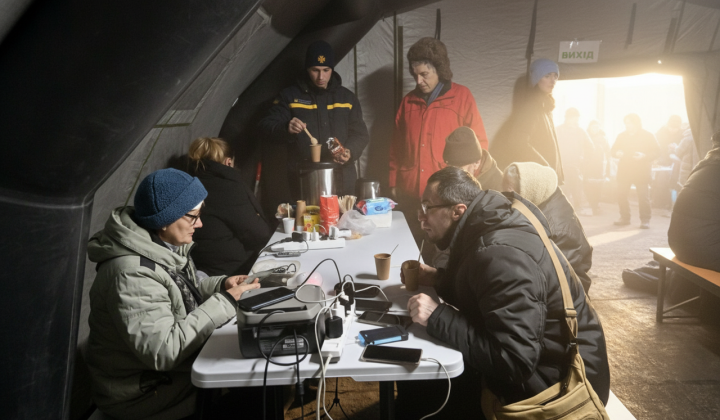
Telecommunications Performance During Blackouts
According to ХВИЛЯ: Stanislav Prybytko, Deputy Minister of Digital Transformation, has detailed the telecom industry's performance during the widespread power blackouts of the 2024-2025 winter and outlined preparations for the next season. He described this past winter as the most challenging for the sector since the war began, with over 36,000 base stations requiring backup power. Prybytko noted that in 2022, communications would fail within hours of a power cut, but this winter saw significant improvement, with networks remaining operational even during outages.
The Ministry introduced Regulation No. 1532 to cut bureaucratic red tape between telecom operators and local authorities. While the 'Connection Generator' project initially received over a hundred applications, most were rejected on technical grounds. In autumn, operators purchased 15,000 new generators, 14,000 of which are already in Ukraine. 'The main challenge for communications during local blackouts is not a lack of generators, but a critical shortage of personnel,' Prybytko emphasized.
Infrastructure and Technology Advancements
By mid-2025, xPON technology coverage had reached 52.5%. Pilot 5G networks are operational in Lviv, Borodianka, and, since February 2025, in Kharkiv, with over half a million Ukrainians having tested 5G in real-world conditions. Prybytko also confirmed that 3G will be fully phased out by January 1, 2031, following the signing of Law 4670-IX by the President in November 2024.
According to Ookla data from early 2026, Ukraine's median internet speed exceeds 43 Mbps, far surpassing the outdated regulatory minimum of 2 Mbps for mobile internet. The National Commission for State Regulation of Electronic Communications (NKRECI) will monitor compliance with the new quality of service law. The issue of Starlink being blocked on Ukrzaliznytsia trains remains unresolved, with negotiations with SpaceX ongoing.
Stanislav Prybytko stressed the importance of creating incentives for industry growth, stating:
'The state's role is not to build its own towers using taxpayer money, but to establish a regulatory framework that stimulates sector development.'
During severe blackouts, operators may deactivate 4G and 3G networks, leaving only 2G active for calls and SMS. For ensuring connectivity in shelters, the only reliable solution is installing fixed wired Wi-Fi.
- Regions with the highest preparedness levels: Kyiv City, Volyn, Kyiv, Zaporizhzhia, Kirovohrad, and Odesa oblasts.
- Chernihiv and its region show one of the lowest rates of generator procurement by local communities.
- Most base stations are equipped with batteries providing 6 hours of backup power, with 92% capable of lasting 8 hours.
'For scenarios of 10, 12 hours or more, batteries are insufficient and generators take over. Nearly half of all base stations in the country are now generator-equipped. These generators can sustain communications for over 3 days (72+ hours),' Prybytko summarized.
The presented data highlights significant achievements within Ukraine's telecom sector despite the severe challenges posed by the energy crisis. The expansion of xPON coverage and the rollout of 5G signal steady infrastructure progress. However, the critical shortage of skilled technicians remains a serious impediment that could hinder further innovation and service improvements. This resilience is crucial for maintaining societal and economic functions during Russia's ongoing attacks on energy infrastructure.

Read also