Leaked Russian Plan to Aid Orban Revealed After Hungarian Minister Briefed Lavrov on EU Meetings

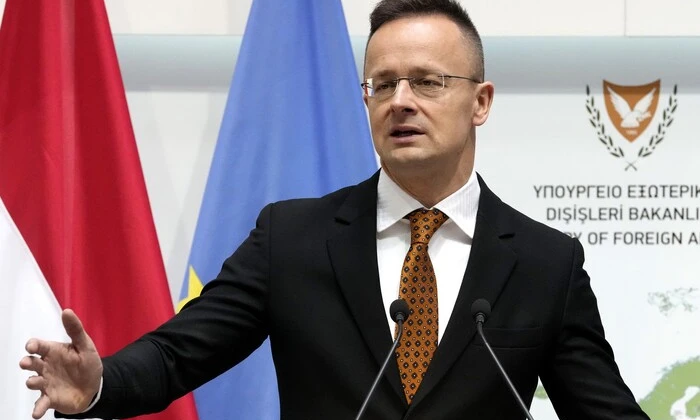
Hungarian Foreign Minister's Communications
According to Главком: According to a European security official cited by The Washington Post, Hungarian Foreign Minister Péter Szijjártó provided his Russian counterpart, Sergey Lavrov, with updates on the proceedings of European Union meetings. Szijjártó reportedly called Lavrov during breaks in EU council sessions, a practice that has alarmed other European partners. This revelation highlights the persistent and controversial diplomatic channels Hungary has maintained with Moscow.
Since Russia's full-scale invasion of Ukraine in 2022, Szijjártó has made 16 official visits to Moscow. His most recent trip was on March 21, 2026, for a meeting with Vladimir Putin. During these contacts, Russian intelligence developed a plan codenamed 'The Game Changer,' aimed at rescuing the popularity of Hungarian Prime Minister Viktor Orbán, who currently trails reformist challenger Péter Magyar. The plan, as uncovered, included a proposal by Russian operatives to stage an assassination attempt on the Hungarian premier.
EU-Russia Relations
For his part, Viktor Orbán has argued that
“the European Union cannot do without Russian energy carriers under current conditions.”
He made this statement following a meeting of EU heads of state and government, where a key topic was Hungary's blockade of a credit for Ukraine. This blockade occurred against the backdrop of halted Russian oil supplies via the 'Druzhba' pipeline. A European security official further stated,
“for many years, Moscow has effectively been at the table for every EU meeting,”
underscoring Russia's perceived influence in European policy debates.
This situation illustrates the complex relationship between the European Union and Russia, as well as the internal political challenges facing Hungary. By remaining dependent on Russian energy, Hungary continues its dialogue with Moscow, causing concern among its European partners who are striving to reduce such reliance. This dynamic could also impact future EU decisions regarding support for Ukraine and the formation of a unified policy towards Russia, testing the bloc's cohesion.
This ongoing situation is further complicated by Hungary's recent decision to withhold significant financial support for Ukraine, linked to the restoration of Russian oil supplies. To understand the broader implications of Hungary's stance and its impact on EU dynamics, read more about how Hungary is leveraging its position in the EU regarding aid to Ukraine.

Read also