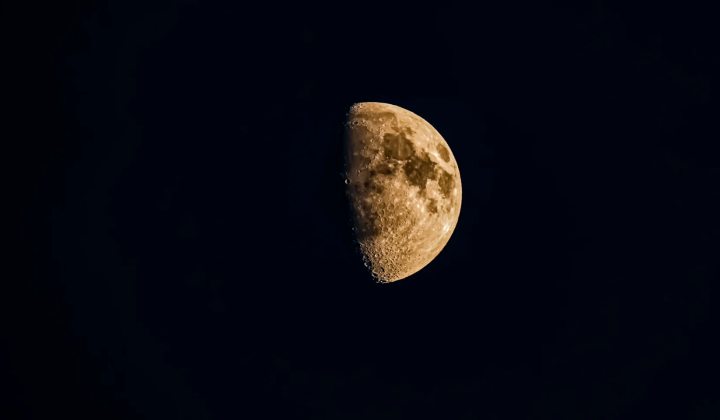
Moon’s Radius Shrinks by 45 Meters Over 400 to 800 Million Years Due to Cooling Interior

Gradual Contraction Over Millions of Years
According to НВ — Техно: Researchers examining the Moon’s tectonic features have determined that its radius has decreased by roughly 45 meters during the past 400 to 800 million years. This shrinkage results from the slow cooling of the lunar interior. Scientists identified over 10,000 relatively young faults scattered across the lunar surface. The Moon’s radius is contracting at a rate of about 6 to 11 centimeters per million years-equivalent to approximately 0.1 microns annually. By comparison, Earth's tectonic plates shift at a much faster pace of around 1.5 centimeters per year.
Lunar Geological Activity and Structure
The Moon consists of a single rigid tectonic plate, with its crust forming a solid, unbroken shell. Faults are dispersed widely rather than concentrated in one region. Areas where the lunar crust is thickest tend to show fewer faults, an important consideration for selecting safe locations for future lunar bases. Early in the Moon’s history, widespread faulting was prevented by a porous, thick upper crust that acted as an insulating layer.
This investigation was published in The Planetary Science Journal and led by Thomas Watters from the Smithsonian National Air and Space Museum. Co-authors include Maria Banks, Cole Nipaver, and Mark Robinson. The team utilized images from the Lunar Reconnaissance Orbiter Camera (LROC), which has been orbiting the Moon for 17 years, to map scarps and ridges across the bright highlands and the dark plains of lunar maria.
“The number of these young faults was far greater than I expected,” Thomas Watters remarked.
He added, “The Moon’s interior continues to cool, causing existing faults to expand and new cracks to form even now.” This discovery provides fresh insights into the Moon’s ongoing geological processes and has significant implications for future human exploration.
Understanding the Moon’s geological activity is crucial for piecing together its history and evolution. The presence of young faults indicates that the Moon remains geologically active, despite a gradual decline in internal activity over time. These findings will also influence the planning of upcoming lunar missions and the establishment of surface habitats, as knowledge of tectonic behavior is essential for ensuring safety and mission success.
Understanding the Moon's geological changes is critical, especially as researchers continue to explore similar phenomena in our solar system. For instance, recent findings from NASA's Webb Telescope have revealed intriguing details about dusty systems surrounding young stars that provide insights into planetary collisions, further enriching our knowledge of celestial dynamics.

Read also