Solar Wind Found to Trigger a New Water Formation Process on the Moon

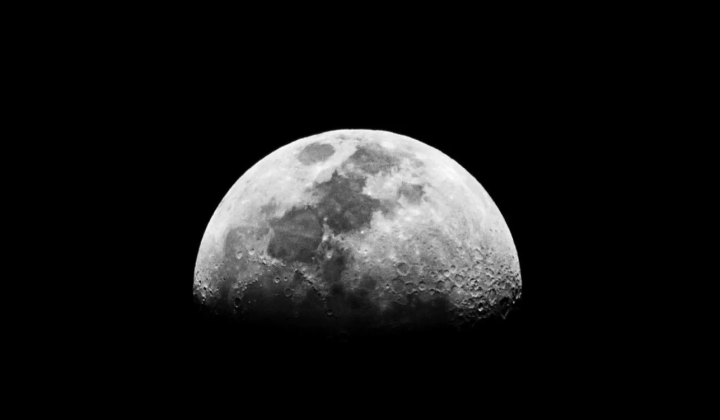
Ilmenite Mineral Study Reveals Key Findings
According to НВ — Техно: On June 11 at 2:30 PM, researchers from Georgia Tech announced the results of an experiment where the mineral ilmenite was exposed to an artificially generated solar wind. The study detected the formation of nanophase iron, a signature of space weathering. This discovery confirms that solar wind can create microscopic structures similar to those found in actual lunar samples.
The experiment was conducted by physics graduate student Roshan Trivedi and recent doctoral graduate Advik Vira as part of the Center for Lunar Environment and Volatile Research (CLEVER), which operates with support from NASA. The center aligns with the goals of the Artemis program. A vacuum chamber simulating solar wind conditions was used for the experiment, and ilmenite samples were analyzed using high-precision electron microscopy.
Why This Discovery Matters
On the mineral's surface, researchers observed both nanophase iron formations and characteristic rims, along with tiny cavities where hydrogen from the solar wind can interact with oxygen, potentially creating water. Physics professor Phillip First noted that water could become a vital resource for people working on the Moon. He emphasized that scientists are particularly interested in the origin of water, as solar wind is one possible mechanism for its formation. Protons from the solar wind supply hydrogen, while oxygen is already present in lunar rocks.
“The results obtained in the lab turned out to be very similar to real lunar samples,” - Advik Vira
Roshan Trivedi pointed out that similar irradiation experiments have been conducted for many years, but previous results could not be studied with such high resolution. This breakthrough opens new avenues for investigating space processes and resource formation on other planets.
This research holds significant implications for future space missions, particularly the Artemis program, which aims to return humans to the Moon and establish sustainable living conditions. Identifying potential water sources on the Moon could greatly impact space exploration plans, as water is a critical resource for life support and fuel production for space travel. Additionally, studying solar wind and its effects on lunar soil may reveal new insights into geological processes on other celestial bodies.
As researchers delve deeper into the Moon's resources, understanding the unusual chemical properties of celestial bodies becomes increasingly relevant. The insights gained from the study of ilmenite and solar wind interactions may not only shed light on lunar water formation but also provide context for the broader implications of space chemistry in our solar system.

Read also