Cold Atom Lab on the ISS Undergoes Major Upgrade


Exploring Bose-Einstein Condensates in Orbit
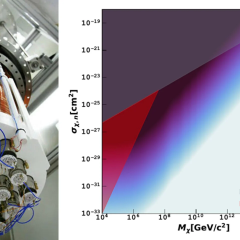
According to НВ — Техно: NASA’s Cold Atom Lab aboard the International Space Station (ISS) continues to push the boundaries of physics by creating Bose-Einstein condensates, widely regarded as the fifth state of matter. This compact device, resembling a small refrigerator, chills atoms to an extreme temperature of roughly -273 degrees Celsius. Since its launch in 2018, the lab has now received its fourth major upgrade, highlighting ongoing technological refinement and progress in space-based research.
How the Research Works
The experimental process begins by heating strips of metallic rubidium or potassium to 400 degrees Celsius, after which the atoms are cooled to the ultra-low target temperatures. Scientists control the entire setup remotely from Earth, enabling global coordination among research teams. Five international groups are currently collaborating on the station, studying the properties and potential applications of Bose-Einstein condensates.
Researchers believe these orbital experiments could spark a 'quantum revolution 2.0,' unlocking new insights into quantum phenomena. The technologies developed to achieve such low temperatures may lay the groundwork for future breakthroughs in physics and other scientific fields.
Bose-Einstein condensate experiments on the ISS represent a critical step forward in quantum physics. They promise to deliver fresh data for theoretical studies on the fundamental principles of matter and energy. The findings could drive advances not only in basic science but also in practical technologies like quantum computing and novel materials, boosting international competitiveness in these areas.

Read also