Romania Experiences Its Strongest Earthquake in Years with Magnitude 5.7 Felt Across Ukraine

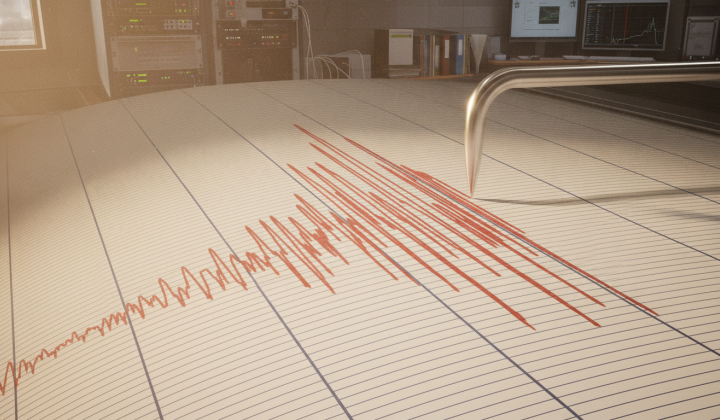
Earthquake Strikes Romania
According to Рубрика — Суспільство: In the early hours of November 18, a magnitude 5.7 earthquake shook Romania’s Vrancea seismic zone. The tremors extended beyond Romania’s borders, being felt in eight regions and major cities across Ukraine. According to Romania’s National Institute of Earth Physics, the quake’s epicenter was located 16 kilometers west of Nereju Mic, at a depth of 120.8 kilometers. The intensity at the epicenter reached level VI on the macroseismic scale, marking it as the strongest earthquake in Romania in recent years.
The last earthquake exceeding this magnitude occurred in October 2018, with a 5.8 magnitude event in Buzău County. Following the recent quake, emergency services received nine calls, seven of which required medical attention. Six people were hospitalized, including one individual who suffered a head injury. Despite these reports, no significant material damage was found after inspections.
Impact Felt in Ukraine
Ukrainians in Kyiv, Odesa, Poltava, Vinnytsia, Kirovohrad, Mykolaiv, Cherkasy, and Dnipropetrovsk regions reported feeling the earthquake's tremors. Residents of cities like Odesa, Izmail, and Kyiv shared videos showing chandeliers swaying, and similar footage surfaced from Chisinau, Moldova’s capital. This event underscores not only Romania’s seismic risks but also the vulnerability of neighboring countries to cross-border tremors.
The Vrancea region is known for its history of significant seismic activity, which remains a concern for local populations. Given the recent increase in earthquakes, it is crucial for regional authorities and civil protection agencies to maintain preparedness for potential future shocks to ensure public safety across affected areas.
As the seismic activity in Romania raises concerns, it's important to note that similar events have been occurring in other regions. For instance, a recent earthquake in the Tyrrhenian Sea prompted evacuations in Sicily and the Aeolian Islands, highlighting the broader implications of geological instability in various areas. This underscores the necessity for continuous monitoring and preparedness in the face of such natural disasters.

Read also