NASA Seeks Innovative Solutions to Extend Hubble Telescope's Mission Before Its Expected 2033-2034 Reentry

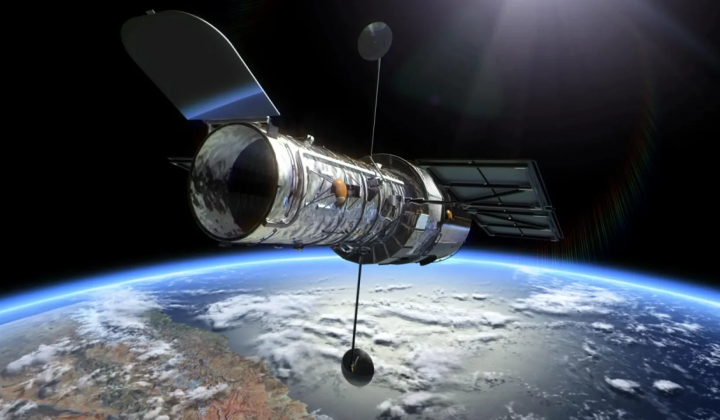
Extending the Lifespan of the Hubble Space Telescope
According to НВ — Техно: NASA is exploring options to prolong the operational life of the Hubble Space Telescope, which is projected to reenter Earth's atmosphere around 2033 to 2034. The agency has issued a request for information to private aerospace companies, seeking technologies that could support servicing, orbital boost, or safe mission conclusion for Hubble. Proposals from industry partners are being accepted until 3:00 PM Eastern Time on November 30, 2026.
Hubble's Current Status and Servicing Challenges
Having orbited Earth at low altitude for more than 35 years, Hubble lacks an onboard propulsion system to adjust its orbit, complicating efforts to maintain or extend its mission. NASA estimates that any orbital-boost operation to raise Hubble’s altitude would need to occur by 2032. One potential strategy involves deploying a specialized spacecraft designed to elevate Hubble to a higher, safer orbit.
In addition to orbital adjustments, NASA is also considering in-space servicing and upgrades to Hubble’s systems. If continued operation proves unfeasible, the agency plans to ensure a controlled deorbit or safe disposal in orbit. To gather innovative ideas and technologies, NASA published its request for commercial servicing solutions on October 29, 2026.
Jared Isaacman, a NASA representative, emphasized: 'Hubble remains a vital scientific instrument, and it is crucial that we explore every viable option to extend its mission as long as possible.'
He further noted that prolonging Hubble’s mission would unlock new discoveries and expand our capacity to study the cosmos. The mission is managed by NASA's Goddard Space Flight Center in Greenbelt, Maryland, with operational support from Lockheed Martin Space. Scientific research is coordinated by the Space Telescope Science Institute in Baltimore.
NASA’s active efforts to extend Hubble’s mission and secure its safe operation amid the risk of atmospheric reentry highlight the telescope’s ongoing contribution to astronomy. The involvement of private companies in developing servicing technologies could accelerate innovation in space operations and pave the way for future maintenance of orbital assets. Hubble continues to provide invaluable insights into the universe, making preservation efforts critical for advancing space science.
As NASA continues to seek innovative solutions for the Hubble Space Telescope's longevity, the agency has also reached out to private companies for proposals on how to enhance Hubble's orbital stability by 2032. This initiative highlights the urgency of finding effective strategies, as detailed in our article on the orbital boost mission planned for the telescope.

Read also