At the Moon's South Pole, Some Microbes From Earth Could Persist, NASA Team Finds

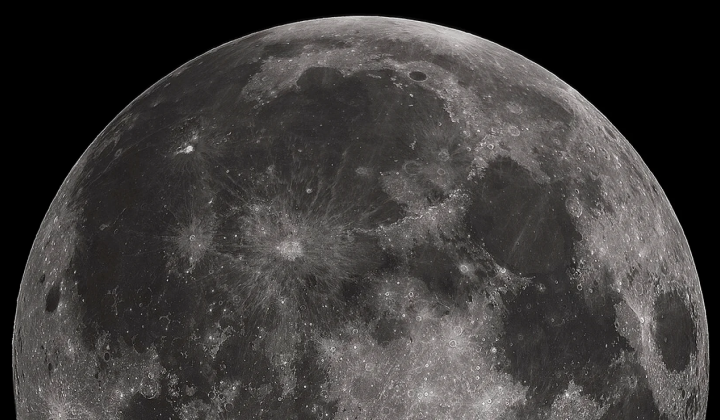
Could Human Missions Spread Contamination? Earth Microbes May Survive in Shadowed Lunar South Polar Zones
According to НВ — Техно: As human spaceflight prepares to return to the Moon, a new study warns that microscopic passengers aboard crewed missions could outlast their journey. Researchers from NASA found that certain terrestrial microorganisms are able to survive in dark, protected recesses near the lunar South Pole. Published in Science Advances in August 2026, the findings raise concerns about biological contamination not only of the Moon but also of Mars, and about the added challenge of searching for life on those worlds.
The team tested how well several species hold up under lunar conditions: Bacillus subtilis, Staphylococcus aureus, Deinococcus radiodurans, Fusarium species, and Aspergillus niger.
Aspergillus niger proved especially resilient, surviving ultraviolet exposure even in exposed, sunlit places. In this study, survival was defined as the organism staying viable for at least one full Earth day without growing or reproducing.
To simulate realistic conditions, NASA scientists used detailed elevation and temperature data from the agency's robotic interplanetary spacecraft. The models covered three locations near the Moon's South Pole: the rim of Nobile Crater, Connecting Ridge, and the rim of de Gerlache Crater. Suitable hiding spots ranged from craters several kilometers wide to shadowed hollows as small as an astronaut's bootprint.
The researchers also emphasize how easily contamination could occur: a patch of skin the size of a pencil eraser contains roughly one million bacteria. Robotic equipment is sterilized by heating it above 204 °C, but applying that level of heat to human missions is not realistic. With no liquid water, atmosphere, or moderate warmth on the Moon, microbes would likely lie dormant, yet their persistence might contaminate measurements of the Moon's original chemistry and interfere with the search for possible biological signatures on Mars.
For future planning, the results serve as a reminder that biological contamination is a serious factor in mission design. If Earth microbes can endure these harsh conditions, stronger sterilization methods and careful safeguards will be needed to keep the Moon and Mars pristine for unbiased scientific investigation.
As NASA plans to facilitate more than 20 lunar landings by 2029, the implications of microbial survival on the Moon become increasingly critical. Understanding how these microorganisms might persist in harsh lunar environments not only raises concerns about contamination during human missions but also emphasizes the importance of safeguarding future explorations. To explore NASA's ambitious plans for establishing a Moon base, you can read more about it here.

Read also