Ukraine War Prompts NATO to Rethink Its Strategic Future

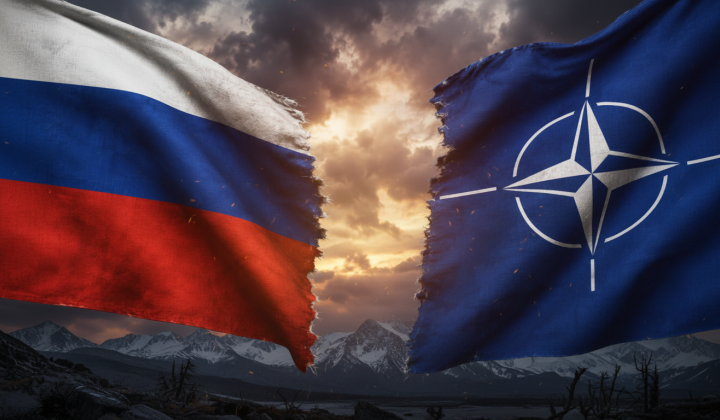
How Ukraine Is Reshaping NATO's Agenda
According to ХВИЛЯ: Officials along NATO's eastern flank are debating how the war in Ukraine should influence the Alliance's direction. NATO Secretary General Mark Rutte confirmed that President Volodymyr Zelensky has been invited to the upcoming NATO summit in Ankara this July. Before that gathering, foreign ministers met in Sweden to address critical security and defense issues. U.S. Secretary of State Marco Rubio called this meeting one of the most consequential in NATO's history and warned that ammunition production is insufficient for future conflicts.
Discussions also covered the presence of American troops in Poland. Rubio reiterated President Donald Trump's pledge that Washington would maintain its current military footprint in Poland. Retired Lieutenant General Richard Newton noted that the Pentagon is studying Ukraine's rapid military-industrial adaptation, which has drawn interest from several countries looking to follow Kyiv's example-both in terms of quality and the significant increase in weapons production on the front line.
New Challenges and NATO's Adaptation
Finland joined NATO in 2023, and Sweden is expected to follow in 2024. Finland's accession added over 800 miles of direct NATO border with Russia. Poland has allocated nearly 5% of its GDP to defense this year, reflecting a regional surge in focus on national security. As Andriy Sadovyi stated,
“today, the Ukrainian army is number one in Europe”
and believes that
“NATO needs the Ukrainian army”
.
Additional challenges facing the Alliance are also under discussion. Paweł Zalewski emphasized that 'for decades, NATO focused on expeditionary warfare and counterterrorism,' while modern warfare increasingly depends on technologies such as drones. Key topics for the summit include:
- drone warfare
- cyber defense
- civilian resilience
- large-scale mobilization
According to Marcin Bosacki, NATO's eastern flank is 'much stronger than even five years ago,' demonstrating an adequate response to Russia's aggressive strategy. Before the invasion, Putin's main grievance was NATO's eastward expansion and Ukraine's desire to move closer to the Alliance, while Russia demanded that NATO's military presence roll back to 1997 levels. With Russia's invasion now in its fourth year, the importance of NATO's cooperation and adaptation is increasingly evident.
This meeting underscores not only the value of sharing experiences between Ukraine and NATO but also the Alliance's growing role amid shifts in the global security architecture. As threats from Russia continue to escalate, NATO's adaptation to new challenges and the integration of partner nations like Ukraine represent a critical step in strengthening Europe's defense framework.
As NATO recalibrates its strategic approach in light of the ongoing conflict, understanding the future collaboration priorities with Ukraine becomes essential. This alignment is not only crucial for the Alliance's immediate response but also for shaping its long-term objectives in a rapidly evolving security landscape.

Read also