Underground Fungal Network Mapped by Scientists Reveals Staggering Scale

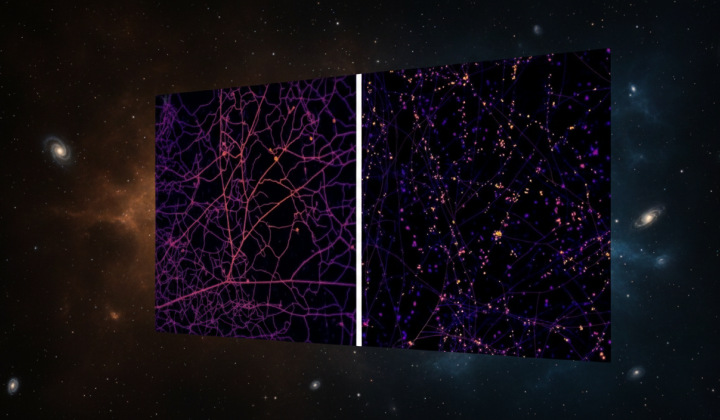
Mapping a Vast Subterranean Fungal Web
According to ХВИЛЯ: For the first time, an international team of researchers has measured and mapped an immense underground network of fungi, specifically arbuscular mycorrhizal fungi. The study found that the total length of fungal threads reaches 68 quadrillion miles (approximately 109 quadrillion kilometers)-roughly 730 million times the distance from Earth to the Sun. These threads store around 300 megatons of carbon, which is 4 to 6 times more than the carbon contained in all humans on the planet. The findings were published in the journal Science.
Research Methods and Key Findings
To build this map, the team gathered data from hundreds of previously published studies and analyzed over 16,000 soil samples collected worldwide, employing a machine learning model. The densest fungal networks were found beneath grasslands and steppes, particularly in Florida's Everglades, the Sudd wetlands in South Sudan, and the Tibetan steppe. In agricultural soils, fungal density is roughly 50% lower than in untouched lands.
Biophysicist Thomas Shimizu from the AMOLF institute in Amsterdam captured images of lab-grown samples. Study authors, including Toby Kiers, note that more than 70% of land plant species on Earth depend on these fungi. Kiers emphasizes:
'People just don't pay attention to these ecosystems.' Toby Kiers
He also remarks: 'It gives a certain sense of the scale of what we're dealing with,' highlighting the importance of preserving these fungal networks, because 'once they're gone, they're very hard to bring back.'
The authors acknowledge significant uncertainty in their estimates, and some ecosystems, such as arid lands, remain poorly studied. This research opens new frontiers in understanding subterranean ecosystems and their impact on global ecology.
Mapping these underground fungal networks is a crucial step in comprehending Earth's ecological processes. These fungi play a critical role in maintaining biodiversity and ecosystem stability, which in turn influences global carbon cycles. The results could improve our understanding of how climate change affects subterranean ecosystems and their ability to adapt to new conditions. Preserving these networks is becoming increasingly important in light of the environmental challenges facing humanity.

Read also