Six Ukrainian and International Media Offices Destroyed in Overnight Strike on Kyiv

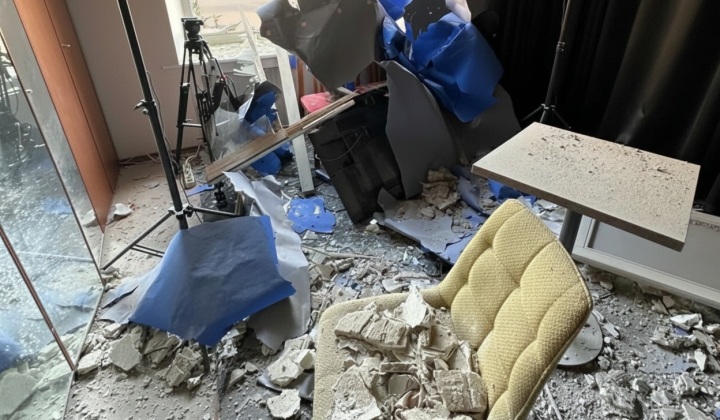
Media Offices Hit in Kyiv Attack
According to Главком: During the night of May 24, Kyiv was once again targeted by a Russian assault, resulting in damage to the offices of six media organizations. Among them are the news agency UNIAN, online outlets Realna Gazeta, Hraty, and Shelter, as well as studios belonging to German broadcasters ARD and DW in Ukrainian. The damage includes shattered windows, collapsed plaster, and breached walls.
UNIAN’s office was struck by a blast wave that blew out windows in the editorial building. The office of Realna Gazeta, a media outlet relocated from Luhansk, also suffered severe damage, with windows smashed, part of the ceiling plaster falling, and furniture and equipment ruined. The shockwave further impacted the interior spaces of Hraty, including its editorial office and podcast audio studio. The business center housing Shelter’s online media office also sustained damage, though no staff members were injured.
The studio of German public broadcaster ARD was heavily damaged, as the blast wave partially destroyed it, breaking windows and collapsing several walls. No editorial staff were present at the time of the strike. The Kyiv bureau office of DW in Ukrainian also experienced significant damage, with blown-out windows and damaged ceilings, but all employees remained safe.
Reactions and Aftermath
Serhiy Tomilenko, head of the National Union of Journalists of Ukraine (NUJU), stated that the union is documenting crimes against journalists and media outlets while informing international partners, including the European and International Federations of Journalists. He emphasized that the Russian attack once again struck infrastructure vital to society’s right to access independent information.
“The Russian attack once again hit the infrastructure that ensures society’s right to access independent information. The NUJU is documenting crimes against journalists and media, informing international partners-the European and International Federations of Journalists, international human rights and media organizations-and insists on a proper international response and holding Russia accountable,” said Serhiy Tomilenko.
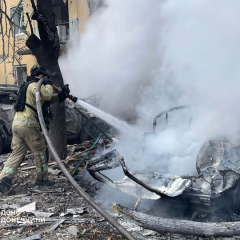
In response to the attack, Ukraine is demanding an urgent meeting of the UN Security Council and a joint session of the OSCE Forum for Security Cooperation and the OSCE Permanent Council. Rescue crews are operating in Kyiv’s Shevchenkivskyi and Podilskyi districts, where heavy engineering and robotic equipment are being used to clear and remove debris.
Hungarian Foreign Minister Anita Orbán condemned the strike on Kyiv, while journalists continue their work despite ongoing threats. “It’s nothing. We’ll fix it,” noted Mykhailo Hannitsky, a media representative. Although Kyiv increasingly suffers from Russian aerial terror, the motivation of DW journalists working in Ukraine remains unbroken, reported Mykola Berdnyk.
This attack highlights the continued deliberate targeting of media in Ukraine, raising concerns about journalist safety and freedom of the press. The response from international organizations is crucial, as they can influence the situation and help protect media workers in conflict-affected countries. Such ongoing assaults also call into question the state’s ability to safeguard critical infrastructure essential for a functioning democratic society.
The recent attack on media offices is part of a broader pattern of strikes in Kyiv, which also saw significant damage to other key locations. For instance, the recent overnight assault on Hotel Ukraine highlights the ongoing threat to civilian infrastructure in the city. Such incidents raise concerns about the safety of not only journalists but also the general public as these attacks continue to disrupt vital services and access to information.

Read also