In Germany, Researchers Build Nanorobots That Use Light to Round Up Bacteria

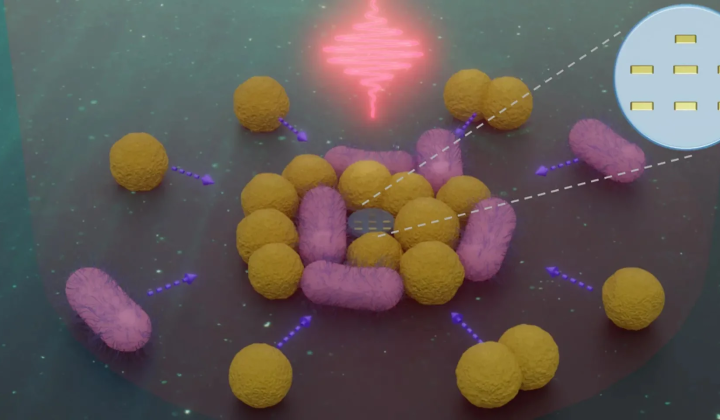
Miniature Robots from the University of Würzburg
According to НВ — Техно: Led by Professor Bert Hecht, a team at the University of Würzburg has created nanorobots measuring under 1 micrometer across. That makes them roughly 50 times thinner than a human hair, and they are designed to operate in microscopic environments such as water. These tiny machines can locate, collect, transport, and release bacteria at specific spots using only light.
How the Light-Powered Nanorobots Work
The bots move thanks to a recoil force generated when photons change direction. Their design features plasmonic nanoantennas that absorb a particular color of light and send it along a set path, while embedded nanowires shift position in response to the light's polarization. In tests, the nanorobots made fast 90-degree turns and hauled large clusters of bacteria, although their speed dropped while carrying such loads.
Researcher Jin Qin described the innovation as a light-driven nanorobot capable of tracking and collecting bacteria.
Being able to manipulate bacteria with light opens up fresh opportunities in microbiology and biomedicine. Such technology could lead to better treatments for infectious diseases and support new ways of delivering drugs. This advance is part of a broader effort to build tiny machines that work at the cellular level, and further research may push precision medicine and microscopic engineering forward significantly.

Read also