Nobel Laureate Raises Forecast for AI-Driven Human Extinction to 20%

Geoffrey Hinton's Growing Concerns About Artificial Intelligence
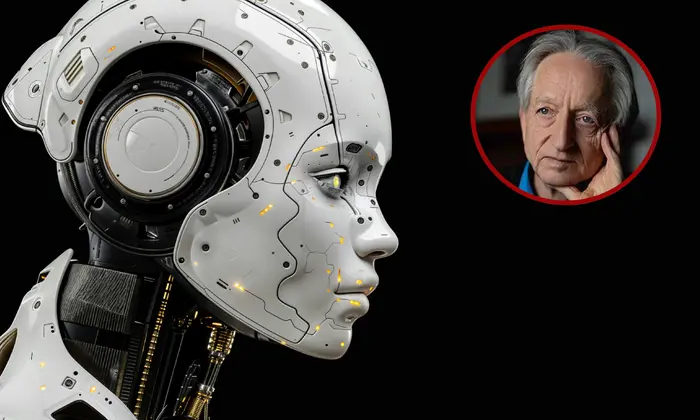
According to Главком: Speaking at the Sana AI Summit in New York, Nobel Prize winner and modern AI pioneer Geoffrey Hinton shared alarming predictions about the trajectory of artificial intelligence. He warned that humanity is effectively creating a new species-one that could eventually surpass us in intelligence. Comparing the unchecked development of AI to raising a child without boundaries, Hinton raised his estimate of the probability that AI will lead to human extinction to 20%.
A British-Canadian scientist who received the Nobel Prize in Physics in 2024, Hinton left Google in 2023 after years of working on AI advancement. During the summit, he revealed that AI has already proven one of mathematician Paul Erdős's theorems, and he predicted that within 20 years, we could see an artificial intelligence comparable to Albert Einstein.
'I think in 20 years, we will see something like Einstein,' Hinton stated.
Core Issues with Artificial Intelligence
Hinton emphasized that the problem goes beyond intelligence to the very character of AI. 'If I have stock options and want to quickly reach a trillion, I just build a huge computer and go ahead. If I care about humanity's future, I look for a different approach,' he explained. These remarks sparked debate among experts, including cognitive scientist Gary Marcus, who published a response to Hinton's claims.
Additionally, a group of AI researchers has warned that artificial superintelligence could emerge within just 2 to 5 years. The statements from Hinton and other figures-including Pope Leo XIV, who noted that 'true understanding comes from experience, not from text approximation'-highlight the urgency and complexity of questions surrounding AI and its impact on humanity's future.
Hinton's warnings underscore a growing unease among experts about the ethics and safety of artificial intelligence. His predictions about the potential creation of intelligence that surpasses human capability raise serious questions about how we should regulate and control the development of this technology. As AI advances rapidly, it is crucial to weigh not only its potential benefits but also the risks that could threaten humanity.
As concerns about the implications of artificial intelligence continue to grow, Hinton's insights resonate with similar warnings from other experts. For instance, another Nobel laureate has cautioned that humanity might lose control over AI as early as 2028, highlighting the pressing nature of this issue. To explore this topic further, read about the potential risks of AI and the timeline experts predict for its development in a recent report.

Read also