Irish Passport: how to obtain, photo, conditions, investments

The Irish passport is powerful and can open many opportunities. Therefore, such an official status is desirable and necessary. However, obtaining an Irish passport is not that easy: it is not just about the photo of the Irish passport, but about a whole and complicated bureaucratic machine.
So it is worth knowing right away how to obtain this status: one can obtain an Irish passport through investment, marriage, or refugee status as a Ukrainian. All these procedures are different.
What is an Irish passport and what advantages does it provide
Ireland remains one of the most attractive countries in the European Union for obtaining citizenship due to economic stability, an English-speaking environment, and the status of a full EU member. The Irish passport traditionally ranks high in global mobility indexes, and the citizenship acquisition process has several features that distinguish Ireland from other European states.
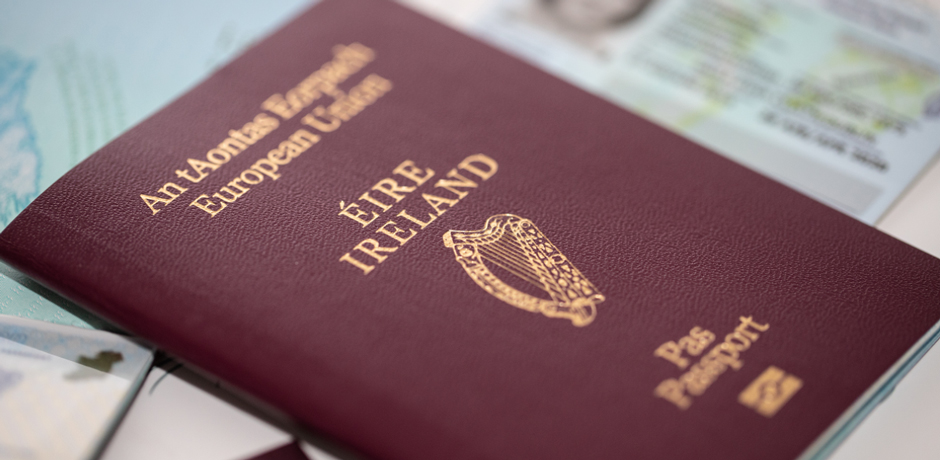
The Irish passport is an official document that confirms the citizenship of the state and grants the owner a full range of rights within the European Union, including the right to free movement, residence, employment, and education in any member country of the bloc without additional permits. Irish citizenship also opens visa-free access to over one hundred and ninety countries worldwide, including the United States under a simplified visa program, Canada, and most Asian states.
A unique advantage of the Irish passport remains the so-called Common Travel Area between Ireland and the United Kingdom, which allows Irish citizens to live, work, and vote in Great Britain without needing additional permission – this agreement is effective regardless of the UK's exit from the European Union. Additionally, Ireland traditionally allows dual citizenship, so obtaining an Irish passport does not require renouncing the citizenship of the country of origin.
An additional advantage is that children born abroad to Irish citizen parents have the right to citizenship by descent, and the mere possession of an Irish passport opens access to a strong labor market in the country, where many multinational technology and pharmaceutical companies have their European headquarters.
Who can obtain an Irish passport
Irish legislation provides several main grounds for acquiring citizenship, each with its own requirements and features:
- Citizenship by birth – granted to children born on the territory of Ireland if at least one of the parents is an Irish citizen, a British citizen, or has the right to reside permanently in the country.
- Citizenship by descent – available for individuals whose father or mother were Irish citizens at the time of the applicant's birth, regardless of the country of birth.
- Naturalization – the primary pathway for foreigners who have lived in the country lawfully for the statutory period.
- Citizenship through marriage or civil partnership – a simplified procedure for individuals in officially registered relationships with an Irish citizen.
- Exceptional cases at the discretion of the Minister for Justice – granting citizenship without meeting the general conditions for individuals closely associated with citizens or natives of Ireland, foreigners accepted into public service, or refugees.
Each of these pathways requires a separate set of documents and entails individual consideration of the application by the relevant government authorities.
How to obtain an Irish passport after acquiring citizenship
The standard naturalization procedure requires legal residence in Ireland for five years out of the last nine years of residence in the country, meaning the residency period can be interrupted, but the last year directly before applying for naturalization must be spent in the country without traveling abroad. For individuals married or in a civil partnership with an Irish citizen, this period is reduced – a minimum of three years of actual cohabitation in a formal union and three years of continuous residence in the country during the five-year period is required.
As of 2026, the situation for Ukrainian citizens who have received temporary protection status in Ireland has changed significantly. Previously, time spent under temporary protection was not counted toward future naturalization; however, starting in March 2025, Ukrainians who have been in the country for over two years will have the right to apply for Stamp 4 status – a residence permit that already allows for future naturalization. In the fall of 2026, a new Temporary Protection Transition Scheme program will officially allow the transition from temporary protection status to a more permanent basis of residence based on Stamp 4, the time spent under which will count toward future citizenship acquisition.
To participate in the new program, the applicant must meet the following conditions: reside in Ireland for at least one year under temporary protection status, be employed or self-employed for at least six months, and have an annual income of at least twenty-nine thousand four hundred and thirty-two euros. This approach provides a significant portion of the over one hundred and ninety thousand Ukrainians who have received temporary protection in Ireland with the first real prospect of naturalization.
Can one obtain an Irish passport through investment
Despite the widespread information still circulating on various consulting websites, as of 2026, Ireland does not offer programs for obtaining citizenship or even residence permits through direct investment in the country's economy. Previously, the country had an Immigrant Investor Programme (IIP) that allowed wealthy foreigners to obtain residence permits by investing in government bonds, investment funds, or real estate; however, this program has been officially closed by the government, and there are currently no official signals regarding its revival as of 2026.
This means that any offers from intermediary companies regarding “quick acquisition of an Irish passport through investment” should be approached with caution, as there is currently no legal mechanism for such citizenship acquisition in the country. The only real path for entrepreneurs remains starting their own business in Ireland through the Start-up Entrepreneur Programme, which provides a residence permit on the condition of creating a viable innovative enterprise; however, this path does not eliminate the necessity of undergoing the standard five-year lawful residence period before applying for naturalization.
Documents required for passport application
The standard set of documents required to apply for Irish citizenship includes:
- Completed application form for naturalization.
- Foreign passport of the applicant and documents confirming the legality of the previous residence in the country.
- Certificate of no criminal record, properly legalized for use in Ireland.
- Documents confirming continuous residence for the established statutory period – tax payment certificates, employment contracts, lease agreements.
- Proof of the applicant's financial capacity – bank statements or income certificates.
- Two passport-sized photos that meet current technical requirements.
- Marriage certificate or other documents confirming family status if applicable to the chosen basis for acquiring citizenship.
All documents of foreign origin must be officially translated into English, and copies must be certified according to the requirements of the Irish immigration service.
Processing times and obtaining order
The processing of the naturalization application by the Department of Justice, Equality, and Immigration of Ireland usually takes from several months to two years depending on the complexity of the case and the workload of the respective unit, as of 2026 the service continues to receive a significant number of applications and postal inquiries. If the decision is positive, the applicant receives an official invitation to a citizenship ceremony, which is held in various regions of the country – specifically, the nearest ceremonies are scheduled in County Kerry.
During the ceremony, the applicant takes an oath of allegiance to the state and the Constitution of Ireland, after which they are officially considered a citizen of the country and receive the right to apply for a passport to the Passport Service of Ireland. The issuance of the passport itself after successfully passing the citizenship ceremony usually takes several weeks, provided that a complete and correctly prepared document package is submitted.
What the Irish passport looks like and what information it contains
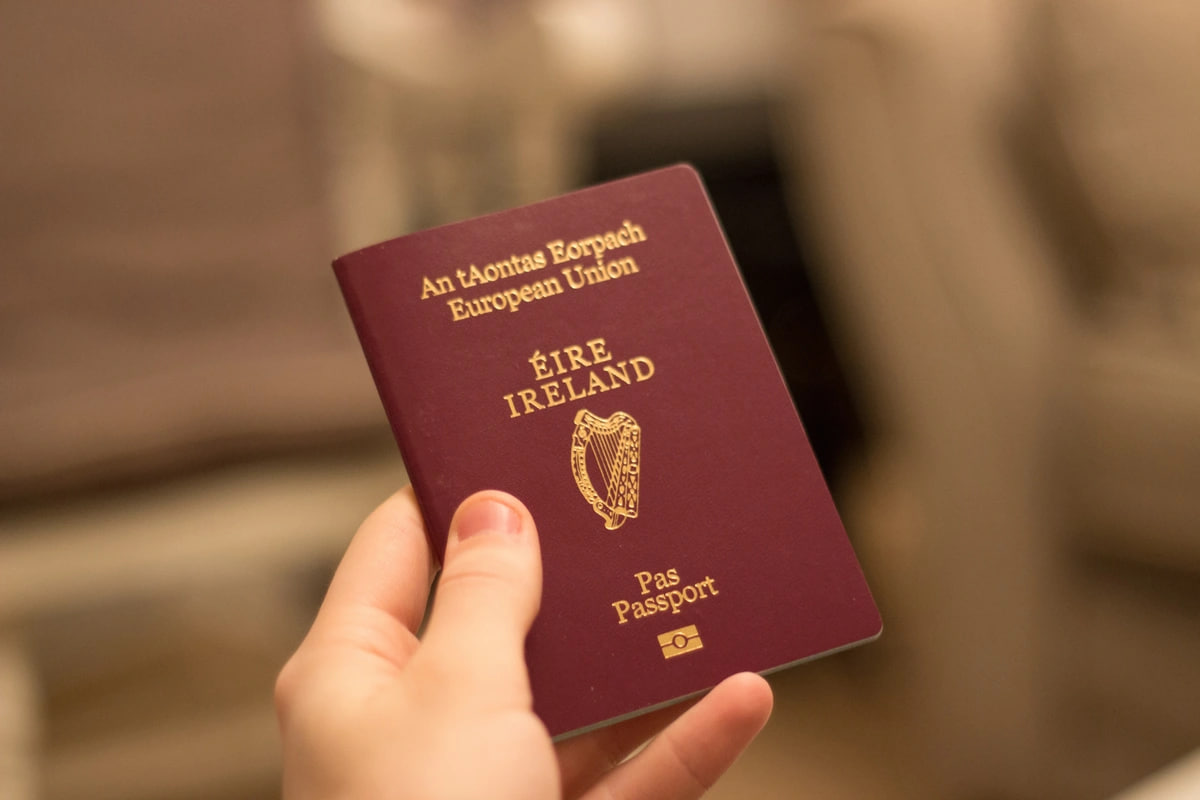
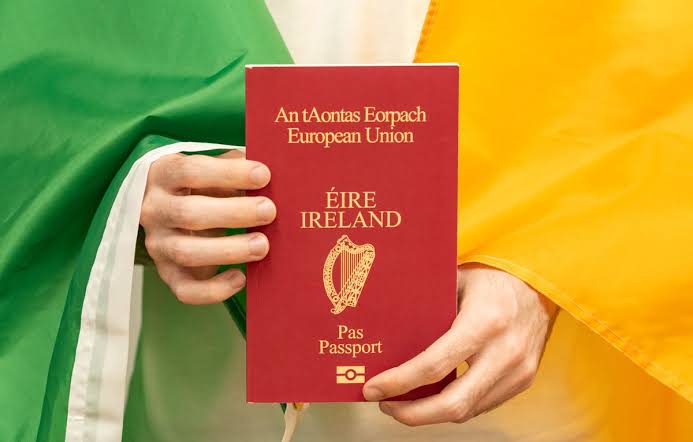
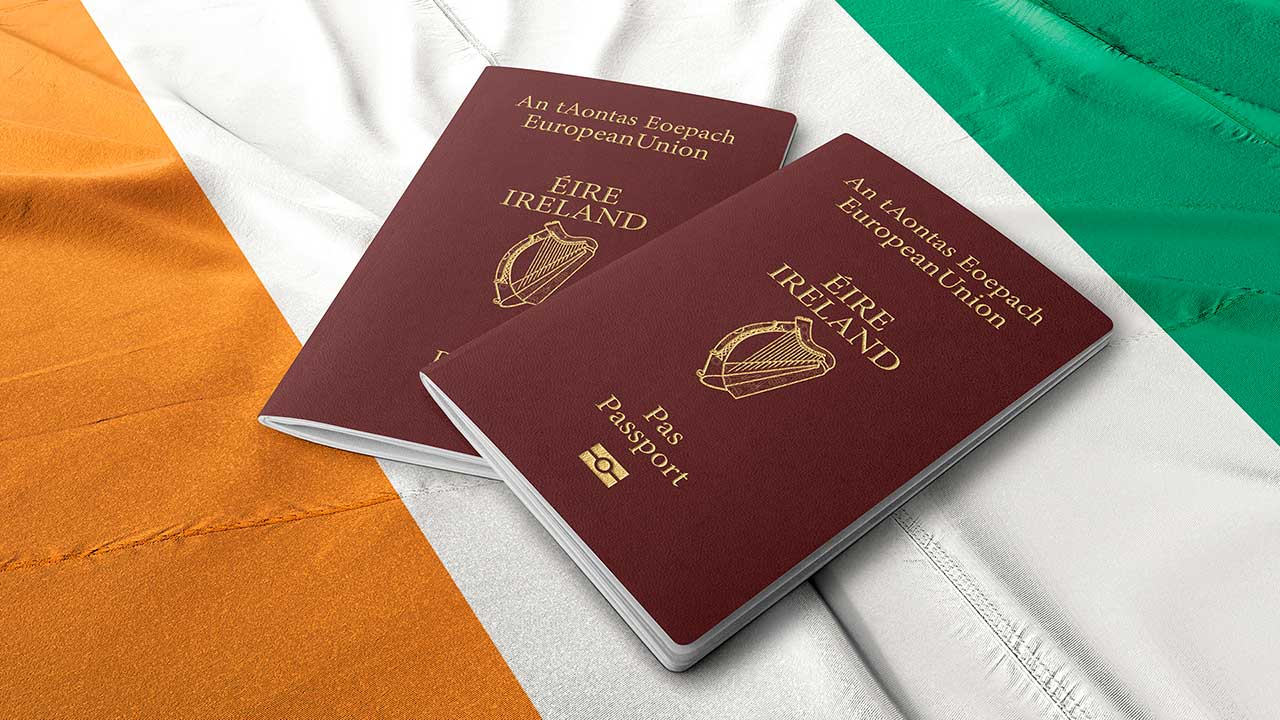
The Irish passport has a traditional dark blue cover with gold embossing of the national emblem – a harp, which is the country's official symbol, located in the center of the front side of the document. Above the image of the emblem, there is the inscription in Irish “Éire” and in English “Ireland”, as well as the official name of the European Union, as the passport is issued according to the uniform standard of documents of the member countries of the bloc.
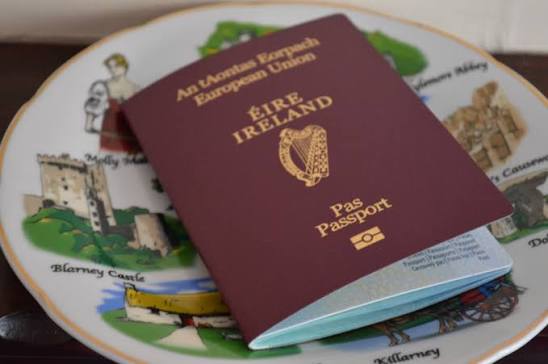
The internal pages of the document are made with a high level of protection against counterfeiting, including holographic elements, microprinting, and a built-in electronic chip containing the biometric data of the owner – a digital image of the face and fingerprints. The personal page of the passport contains a standard set of information: the full name of the owner, date and place of birth, gender, date of issue, and expiration date of the document, as well as the passport number. The validity period of the Irish passport for adults is typically ten years, while for children, it is shorter, requiring timely renewal of the document as the owner grows older.
Therefore, Ireland remains a country that can be considered for the future. This means not just relocation but permanent residence.

Read also