Ukraine Rises as an Independent Power Center: A New Leader for the Free World

Ukraine's Evolving Global Role
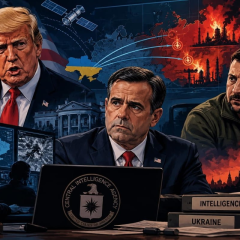
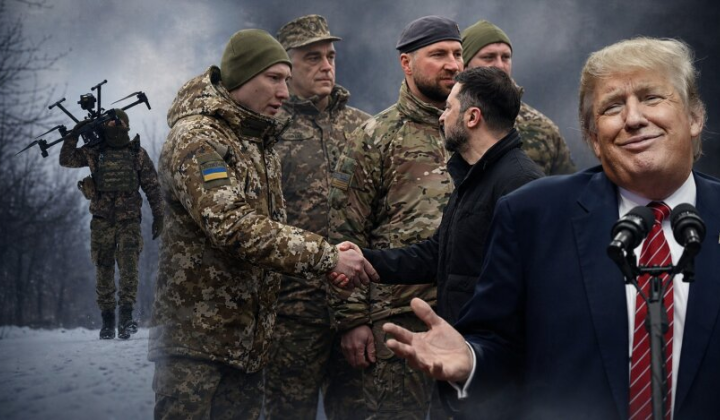
According to ХВИЛЯ: In an article published on April 26, 2026, in The New York Times, columnist David French examines how Ukraine's position on the world stage has transformed. He notes that a nation once predicted to collapse quickly has now become a self-sufficient military force, even sharing weaponry with its partners. French points out that in light of these developments, Europe and Canada are actively building up their own defenses without relying on the United States. He also describes Volodymyr Zelensky as the new leader of the free world.
French references a column by Phillips Payson O'Brien in The Atlantic, which suggests that Kyiv appears to have stopped depending on the United States. Notably, in February 2025, then-U.S. President Donald Trump told the Ukrainian president in the Oval Office:
“You're in a bad position. You have no cards.”
This highlights a shift in the dynamics between Ukraine and the United States.
According to 2025 data from the Atlantic Council, Ukraine had approximately one million people under arms, with the vast majority serving in its ground forces. For comparison, the combined size of the U.S. Army and Marine Corps is around 620,000. This underscores Ukraine's growing military strength against the backdrop of America's reduced influence in the region. French also observes that
“Ukraine is no longer a desperate underdog-it is becoming an independent center of power.”
Europe and Canada Respond
In response to shifting international politics, France is expanding its nuclear arsenal and revising its doctrine to allow nuclear-armed aircraft to be stationed outside the country. Germany, meanwhile, has approved a plan to spend up to one trillion euros on defense and infrastructure, aiming to build Europe's strongest army by 2039. Canada is also increasing its defense budget and plans to spend less on American weaponry.
Last week, NATO procurement officials decided to replace aging American long-range surveillance aircraft with new models built by Sweden's Saab and Canada's Bombardier. Ukraine, for its part, has signed agreements to purchase hundreds of fighter jets from Sweden and France. Volodymyr Zelensky has proposed a new defense architecture for Europe, which would include an alliance of the EU, the United Kingdom, Norway, Turkey, and Ukraine.
French also highlights economic aspects, particularly Trump's request for a record defense budget of $1.5 trillion-40% higher than the current one. However, despite these efforts, questions arise about whether the U.S. can maintain its global influence. As one Chinese businessman noted,
“For us, Trump's attack on Iran is less important than his threat to attack Greenland.”
This suggests that America may be losing the trust of its allies, and Europe is unlikely to follow the U.S. approach to China.
Vice President JD Vance recently stated that he is most proud of the administration's decision to halt arms purchases for Kyiv. This underscores a growing rift between the U.S. and its European partners, which could lead to new geopolitical challenges worldwide.
Thus, the current situation shows that Ukraine, once vulnerable, has now become a key player in international politics, while Europe and Canada are actively strengthening their defenses, moving away from traditional alliances with the U.S.
These changes in Ukraine's global standing, along with its increasing military power, signal a new reality in the global context. As U.S. influence over European security wanes, European nations are seeking fresh ways to safeguard their interests and defense. This dynamic could lead to the formation of new geopolitical alliances and a shift in the global balance of power.
As Ukraine continues to solidify its status as a formidable military power, the implications for global politics are significant. This shift not only affects relationships with traditional allies but also positions Ukraine as a key player in Europe's security landscape. To understand how Ukraine has surpassed the United States in military capability and what this means for the future of international alliances, read more in our article on Ukraine's rising military dominance.

Read also