Constance excavation reveals medieval ship buried in 13th-century loess

Rare medieval sailing craft uncovered
According to НВ — Техно: Archaeologists have found an almost complete medieval sailing ship within a loess layer dated to 1244 at Konradigasse in Constance. The vessel's hull had been reused as part of a ceiling, according to an announcement by the State Office for Cultural Heritage Baden-Wuerttemberg (Landesamt für Denkmalpflege, LAD), following research carried out by archaeologists and architectural historians. Well-preserved medieval hulls are rare in Central Europe, so the discovery offers an exceptional glimpse into the region's maritime past.
The surviving beams span more than 25 square metres of the ceiling, and at least 19 planks remain connected in their original arrangement. Preliminary analysis points to a flat-bottomed cargo vessel designed to move goods across Lake Constance, the waterway linking modern-day Germany, Switzerland, and Austria.
Examination and findings
Investigators have identified at least four repaired sections of the hull. Among them is a distinctive dovetail-shaped wooden patch with no known direct parallels in the medieval shipbuilding tradition of the area. Traces of sealant were found between neighbouring planks and have been sampled for analysis. Wood samples have also been taken for dendrochronological testing to determine when the timber was felled.
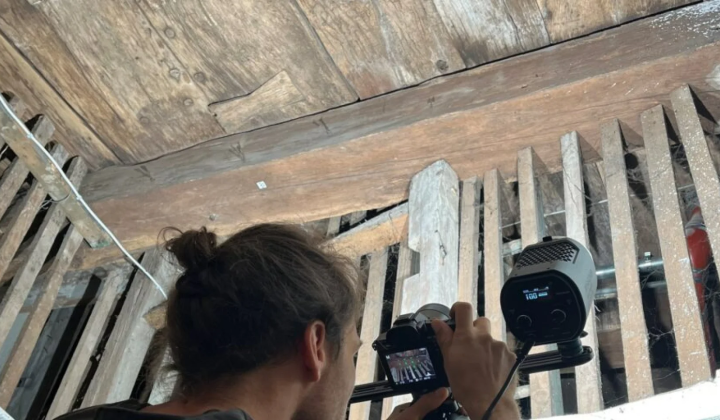
In mid-August 2026, the ceiling was recorded using Structure-from-Motion photogrammetry, a method that combines hundreds of photographs taken from different angles to generate a three-dimensional model. This find enriches existing knowledge of medieval shipbuilding in a region where archaeologists have previously documented Roman settlements near Lake Constance, including Tasgetium, Brigantium (now Bregenz), and Constantia (now Constance).
The discoveries underline Lake Constance's role as a vital trading route during the Middle Ages and its influence on regional architecture and boat construction. Excavations in the canton of Thurgau, launched in March 2026, have also revealed parts of Tasgetium, a settlement founded more than 2,000 years ago, confirming the area's long history of habitation.
This find highlights the importance of Lake Constance as a major medieval trade corridor and provides a fresh perspective on the shipbuilding techniques and practices of that era.
As research continues, further details are likely to emerge about the region's past and its rich cultural heritage.

Read also