California Scientists Discover Amoeba That Thrives at an Unprecedented 63°C

Amoeba Breaks Heat Limits: Scientists Identify the Most Heat-Tolerant Complex Organism
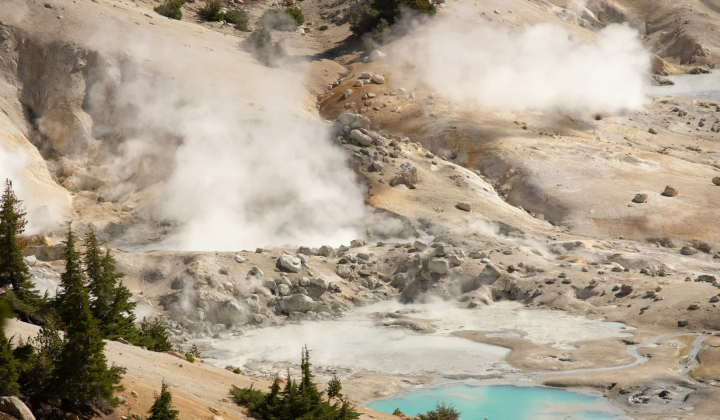
According to НВ — Техно: Researchers at Syracuse University have identified a new species of amoeba named Incendiamoeba cascadensis, found in the geothermal springs of Lassen Volcanic National Park, California. This remarkable organism can reproduce at temperatures as high as 63 °C, setting a new record for heat tolerance among complex life forms on Earth. Previously, the upper thermal limit for eukaryotic organisms was believed to be 60 °C.
Incendiamoeba cascadensis uniquely manages to divide at 63 °C. When temperatures exceed this threshold, its growth ceases, although cellular activity continues. Above 64 °C, the amoeba transforms into a rounded cyst-like state, and astonishingly, it resumes normal growth if temperatures drop back to 60 °C. However, exposure to 80 °C proves lethal for this species.
Interestingly, this amoeba stabilizes its proteins using positively charged amino acids, a trait it shares with heat-loving bacteria and archaea. For comparison, the archaeon Methanopyrus kandleri can survive at temperatures as high as 122 °C. The findings describing this new species were published on September 22 in the journal Cell.
'This challenges our understanding of what is possible and is incredibly exciting.' Angela Oliverio, co-author of the study
Oliverio also noted, 'There may be eukaryotes capable of surviving at even higher temperatures than we currently know.' This discovery has the potential to reshape scientific views on the thermal limits of eukaryotic life and encourage further exploration of organisms thriving in extreme environments.
The identification of an amoeba that can withstand such extreme heat provides crucial insights into the biological boundaries of life on Earth. This research could inspire scientists to search for other heat-tolerant eukaryotes inhabiting harsh environments like hot springs or even extraterrestrial settings. Understanding these organisms may advance new technologies and inform the search for life beyond our planet by revealing the conditions under which life can endure in seemingly inhospitable surroundings.

Read also