Starving to Death in Russian-Occupied Oleshky: Children Among the Victims as Humanitarian Crisis Deepens

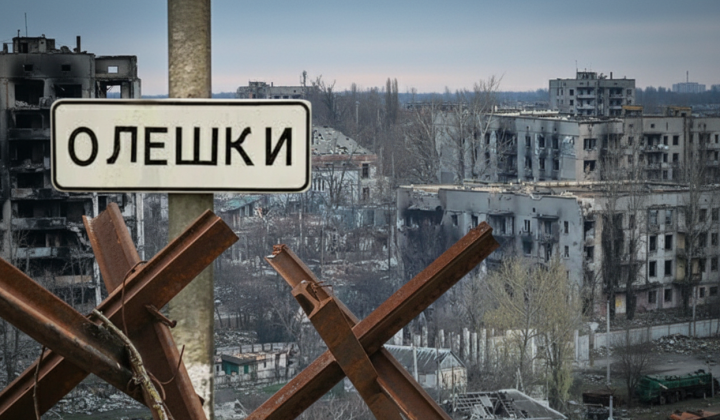
Humanitarian Catastrophe in Oleshky
According to Главком: Since late December 2025, the Russian-occupied city of Oleshky on the left bank of the Kherson region has been under a complete humanitarian blockade, with food supplies virtually cut off. This has led to confirmed deaths from starvation and exhaustion, including among children. Currently, 47 children remain trapped in the city in critical conditions. All roads leading into Oleshky are heavily mined, making it impossible to deliver any humanitarian aid.
Local stores ran out of goods and shut down immediately after the New Year. Residents now face severe shortages of water, electricity, and gas. The bodies of those who have died often remain unburied for weeks or even months, with some being buried in their own backyards due to the lack of alternatives.
“If the situation does not improve, people will simply die of hunger.” - Tetiana Hasanenko, head of the Oleshky City Military Administration
Hasanenko stressed that all Ukrainian government staff are working to organize a humanitarian corridor to rescue the population, but they face serious obstacles at every turn.
Oleksandr Prokudin, head of the Kherson Regional Military Administration, described the impossible choice facing residents:
- Wait for a slow death by starvation;
- Or walk dozens of kilometers on foot across mined roads under constant shellfire, just to find a piece of bread.
He added that “people can no longer be buried with dignity.” According to Prokudin, Russian forces have imposed a total humanitarian blockade, leaving locals in horrific conditions without access to food, medicine, or fuel.
Dmytro Lubinets, Ukraine's Parliamentary Commissioner for Human Rights, has appealed to the International Committee of the Red Cross, highlighting the critical situation. He noted that “after nearly a month, nothing has changed.” Lubinets urged that “the Red Cross must move from observation to decisive action-because the cost of delay is measured in human lives.” He emphasized that “people are forced to ration every sip of water and every crumb of food.”
Meanwhile, representatives of the occupation administration deny these reports. Vladimir Saldo, head of the occupation administration, claimed that “deliveries of food and essential goods to Oleshky continue,” albeit with some interruptions. However, volunteer Iryna Alokhina pointed out that the crisis is not limited to Oleshky alone but extends to neighboring settlements as well.
The situation in Oleshky remains dire, with residents enduring severe hardship amid a full-blown humanitarian disaster.
This humanitarian crisis in Oleshky starkly illustrates the devastating impact of armed conflict on civilian populations. The blockade imposed by occupying forces has cut off access to basic necessities like food and water, threatening the lives of those trapped. Appeals by Ukrainian officials to international organizations underscore the urgent need for action to improve the plight of isolated civilians. In the context of an ongoing war, it is critical that humanitarian corridors function effectively and that the international community responds swiftly to such emergencies.

Read also