Hungarian PM Orban Labels Zelenskyy's EU Plan a 'Declaration of War'

Orban's Critique of the Ukrainian President's Proposal
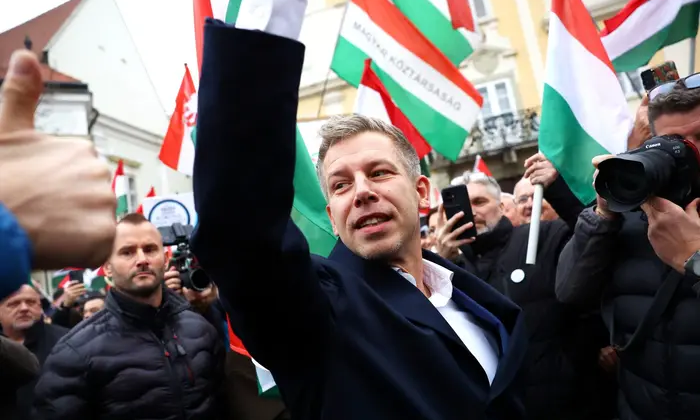
According to Главком: In an interview with the Hungarian newspaper Magyar Nemzet, Prime Minister Viktor Orban characterized Ukrainian President Volodymyr Zelenskyy's plan for EU accession as an open 'declaration of war' against Hungary. Orban accused the European Union, Ukraine, and the Hungarian opposition of conspiring to remove his government from power. He claimed the plan's objective is to secure Ukraine's EU membership by 2027 and asserted that the opposition party 'Tisza,' led by Péter Magyar, is a project orchestrated by Brussels.
Orban further noted that Hungary's parliamentary elections are scheduled for April 2026 and that the 'Tisza' party aims to break the ruling Fidesz party's monopoly. The Prime Minister insisted that 'the Tisza party is a Brussels creation' and that efforts to change the government are funded from Kyiv and Brussels in an attempt to install a pro-Ukrainian, pro-Brussels administration.
Economic and Political Threats to Hungary
Orban also warned of an economic threat to Hungary, alleging attempts to deprive the country of cheap Russian energy. He pointed to a security threat related to the 'export of war' and the potential for drawing NATO and the EU into direct conflict with Russia. The political threat, he stated, involves Ukrainian secret services participating in a 'conspiracy' with the Hungarian opposition to orchestrate a regime change in Budapest.
Orban emphasized that he has successfully mobilized his electorate by leveraging fears of war and economic collapse to unite conservative forces around him. This strategy is widely seen as an attempt to divert attention from domestic issues like corruption and inflation. In his statement, Orban also reaffirmed that Hungary will not participate in financing the Ukrainian army, arguing it contradicts his country's security interests.
Orban's remarks underscore the heightened tensions between Hungary and Ukraine against the backdrop of a deteriorating political climate in the region.
By criticizing Zelenskyy's plan and accusing opposition forces, Orban is attempting to solidify his position ahead of future elections, shifting voter focus away from internal problems. The economic dimension remains crucial, as Hungary's reliance on Russian energy and the perceived threat of a government change could have serious implications for the country's stability. These factors are likely to influence Hungary's future policy regarding support for Ukraine and European integration processes. Orban's stance frequently places him at odds with other EU leaders on matters related to Ukraine and Russia.

Read also