Archaeologists Uncover the Earliest Pottery Brand at a Saudi Arabian Oasis

Bronze-Age Branding
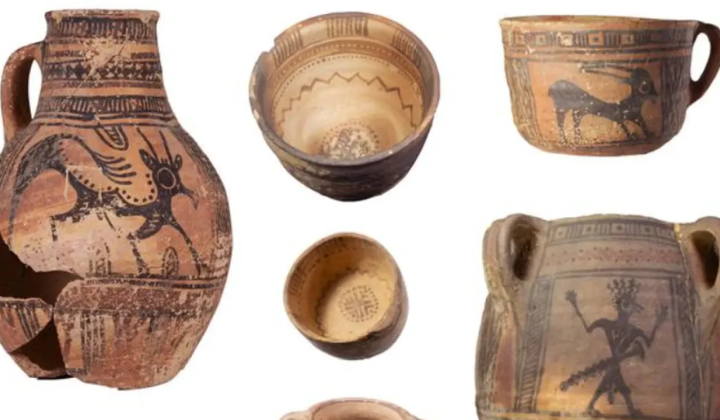
According to НВ — Техно: Around 3,600 years ago, in the Qurayyah oasis in present-day Saudi Arabia, artisans crafted a distinctive two-colored ceramic ware that was traded across hundreds of kilometers. This so-called Qurayyah Painted Ware, decorated with animal imagery and ritual scenes, was instantly recognizable and is now considered the oldest known pottery brand in the world.
Experts at the University of Vienna, who carried out the technological analysis, found that production was remarkably consistent. Ancient copies of the ceramics have also been uncovered, pointing to the brand's high reputation. The Bronze Age potters of northwestern Arabia thus created one of humanity's first commercial labels.
In the study, dozens of vessel fragments from a central kiln in Qurayyah were subjected to technological, petrographic, and geochemical testing. The results revealed uniformity in raw material selection, shaping methods, and manufacturing techniques.
Wide Geographic Reach
Qurayyah pottery has been found not only across modern-day Arabia but also at the sanctuary of the Egyptian goddess Hathor at Timna in the southern Levant, illustrating its extensive distribution. In addition, ancient forgeries have been discovered at Barqa el-Hetiya in Jordan and Al-Ula in Saudi Arabia, further demonstrating that these vessels were valued enough to be imitated.
The production of painted Qurayyah ware continued until the sixth century BCE. Led by Marta Luciani, this research significantly advances our understanding of Bronze Age exchange networks. The findings appeared in the journal PLOS ONE (DOI: 10.1371/journal.pone.0351296).
Branding is often thought of as a modern invention, but this discovery shows that ancient merchants already recognized the power of a recognizable product. The study of such early brands offers fresh perspectives on how trade networks developed and how cultural influences spread between civilizations. Ultimately, the Qurayyah ceramics help archaeologists piece together the social and economic fabric of the ancient world.
While the discovery of the Qurayyah Painted Ware highlights the early roots of branding, it also prompts comparisons with other significant archaeological finds. For instance, the recent unearthing of gold-adorned footwear from a high-status woman's burial in Kazakhstan showcases the diverse expressions of wealth and status in ancient cultures. Such artifacts not only reveal trade practices but also provide insight into the social hierarchies of their time.

Read also