Why the Pentagon's Push to Expel Spain from NATO Is Impossible Under Alliance Rules

Spain's Position Within NATO
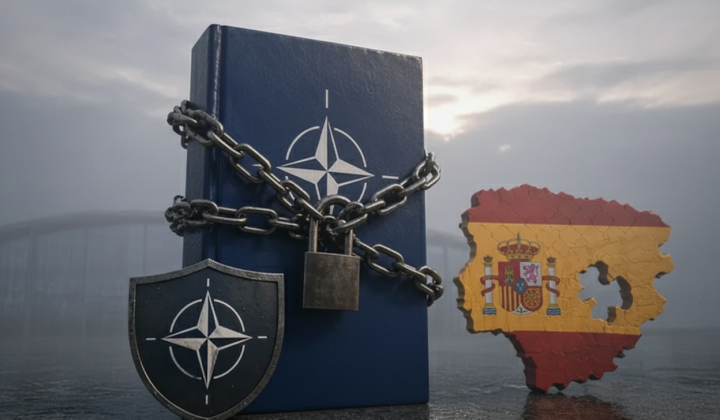
According to Главком: NATO lacks any formal procedures for suspending or expelling member states, including Spain. This issue gained particular relevance after Madrid refused to back a U.S.-led military operation against Iran. Internal Pentagon correspondence reportedly explored ways to pressure allies, including suspending Spain's NATO membership and reconsidering Washington's stance on the Falkland Islands in favor of Argentina.
The alliance's founding treaty contains no clauses allowing for the suspension or removal of members. As NATO representatives have pointed out, 'the organization's founding document does not include any provisions for suspending or expelling a member state.' This legal gap complicates any attempt to impose sanctions on countries that choose not to support joint military initiatives.
Alliance Dynamics and Strains
The Pentagon document also raised the possibility of limiting allied access to senior positions within NATO structures. During the Trump administration, a list of allies was drawn up, dividing them into 'exemplary' and 'unruly' categories. The exemplary allies included:
- Poland
- Romania
- Bulgaria
- The Baltic states
Meanwhile, the 'unruly' group consisted of:
- Spain
- France
- The United Kingdom
Commenting on the situation, Kingsley Wilson stated: 'As President Trump said, despite everything the United States has done for our NATO allies, they have not stood with us.'
The Spanish government, for its part, has emphasized that 'the Spanish government works only with official documents, not with rumors,' signaling an effort to avoid speculation about its position within the alliance. While NATO remains a key platform for international cooperation, issues of military support and allied coordination continue to be pressing.
Spain's situation within NATO highlights the complexity of relations among allies, especially when military backing is critical to collective security. Madrid's refusal to take part in certain operations could further strain ties between alliance members, underscoring the need for clearer communication and collaboration to prevent future conflicts. At the same time, the absence of expulsion mechanisms may reveal structural weaknesses in NATO that demand attention in light of today's global security challenges.
As tensions rise over military support within NATO, the potential for punitive actions against member states has come into sharper focus. While the Pentagon's recent considerations regarding Spain's NATO membership highlight the complexities of alliance dynamics, the U.S. is also exploring sanctions against allies who hesitate to back military efforts in Iran. This situation underscores the intricate balance of power and cooperation that defines NATO's operations in the current geopolitical landscape.

Read also