Boosting Retention and Performance: A Guide to Employee Development Plans

Building a Workforce for the Future: The Power of Employee Development
According to AIHR: In today's competitive market, a strategic focus on employee growth is no longer optional. This article explores the concept of an employee development plan, detailing its various types, benefits, challenges, and practical steps for implementation. The business case is compelling: a Gallup study reveals that 48% of American workers would consider changing jobs for an offer that includes training in new skills. Furthermore, with 94% of employees reporting high workplace stress, effective development programs are crucial for well-being and performance.
Key Types of Employee Development Plans
Organizations can implement several core types of development plans, each serving different strategic purposes:
- Performance-based plan
- Succession plan
- Management-by-objectives
- Ad-hoc
- Leadership development plans
These frameworks can be tailored to a company's specific needs. Major corporations like AstraZeneca and IBM have demonstrated success with systemic approaches through programs such as 'Leader as Coach,' 'Your Learning,' 'IBM Credentials,' and the 'AI Skills Academy.'
The advantages of investing in staff development are significant, addressing skill gaps, boosting employee engagement, and fostering a culture of continuous learning. However, common challenges include limited manager and employee bandwidth, along with infrequent development opportunities. The payoff for overcoming these hurdles is substantial; research shows that engaged teams experience 37% less absenteeism and make 60% fewer errors.
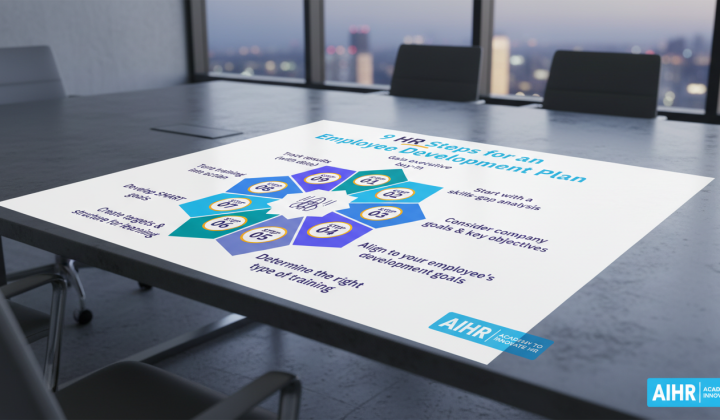
To build an effective development plan, companies should follow a structured process:
- Secure leadership buy-in,
- Conduct a skills gap analysis,
- Align with company goals and key initiatives,
- Integrate individual employee development objectives,
- Identify the required training format,
- Establish learning goals and a framework,
- Develop SMART objectives,
- Translate learning into actionable steps,
- Track outcomes using data and metrics.
Utilizing diverse learning resources-such as cross-training, job rotation, and mentoring-can greatly enhance the effectiveness of this entire process.
Implementing robust development plans reflects the current evolution in human resource management, where investing in employee growth is essential for maintaining competitiveness. Given the high levels of workplace stress and the clear demand for upskilling opportunities, organizations must prioritize creating an environment conducive to professional advancement. This strategic focus not only reduces staff turnover but also drives overall productivity, a critical success factor in an era of rapid market change.

Read also