Putin's Resources Will Run Out by 2025, Polish Analyst Predicts

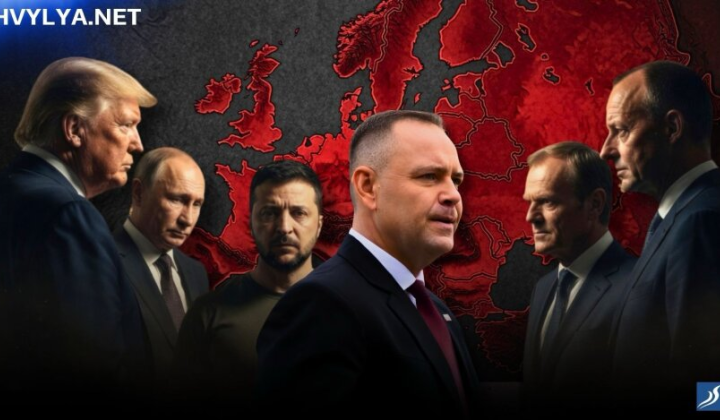
Geopolitical Challenges Under Discussion
According to ХВИЛЯ: In a two-hour conversation, Ukrainian analyst Yuriy Romanenko and Polish expert Piotr Kulpa tackled critical issues surrounding the war in Ukraine, the future of Ukrainian-Polish relations, geopolitical strategies, and the roles of the United States, Germany, and the United Kingdom. The core topic revolved around the fight for Ukraine's geopolitical sovereignty, as Kulpa stated:
“This war is primarily about Ukraine’s geopolitical sovereignty.”
Kulpa argued that Russian President Vladimir Putin will exhaust his financial capacity to sustain the war by 2025. He highlighted that Russia faces a 35% budget deficit and that Ukrainian strikes have rendered 40% of Russian oil refineries inoperative.
“Putin’s strength is his weakness,”
Kulpa remarked, while also noting that Ukraine risks becoming a 'victim of its own success.'
Conditions in Ukraine and Poland
Yuriy Romanenko, for his part, believes that “the strategic window of European support is closing.” He stressed that Ukraine must exit the war before European backing fades, stating: “We need to end the war on terms that allow us to preserve our military potential.” Romanenko also emphasized that “we should not fear anyone.”
The discussion also touched on historical tensions between Ukraine and Poland. Kulpa noted that 95% of Poles are united on the historical issue of the Ukrainian Insurgent Army (UPA). He recalled that in 1946, the UPA and Polish soldiers signed an agreement and jointly fought against the NKVD for the city of Hrubieszów. Meanwhile, polling data indicates 30% support in Germany for the Alternative für Deutschland (AfD) party. Kulpa assessed the likelihood of this party coming to power in Germany at 90%.
Romanenko and Kulpa agreed that historical fetishes between Poland and Ukraine are being exploited as tools of external control. Kulpa stated that Germany is ready to support Ukraine using the entire infrastructure of the European Union, as long as it does not threaten Germany's strategic interests. The United States, he added, will invest resources to prevent Russia from collapsing.
The experts also addressed cooperation between Ukraine and the global defense industry.
“The best proof is not the voices of such prophets... but rather the actual agreements being made by the world’s largest arms companies, which want to work with Ukraine,”
Kulpa emphasized.
This conversation marked an important step in understanding the geopolitical realities facing Ukraine, Poland, and other European nations amid contemporary challenges. It underscores the importance of strategic partnerships between countries and the need to unite efforts to overcome shared threats. The discussion also illustrates how historical issues can shape modern politics and international relations, as well as the critical role of military cooperation in ensuring regional security.
The ongoing geopolitical dynamics in Eastern Europe continue to evolve, particularly in light of historical disputes. For instance, a recent analysis highlights that Warsaw's recent challenges in its relations with Ukraine further illustrate the complexities of regional alliances and the shifting balance of power as both countries navigate their respective interests amid the ongoing conflict. Understanding these developments is crucial for grasping the broader implications of the war in Ukraine.

Read also