August 28 Brings a Deep Partial Lunar Eclipse: More Than 96% of the Moon Will Slip Into Earth's Shadow and Glow Red

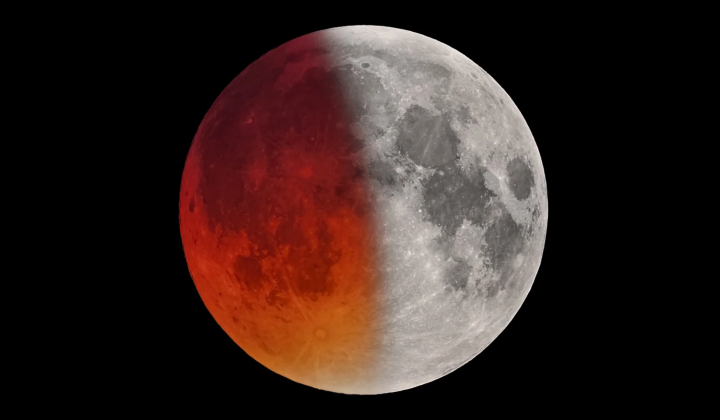
When to Look Up and How to Watch the 2026 Partial Lunar Eclipse
According to НВ — Техно: Published on August 24 at 23:10.
A lunar eclipse happens when Earth lines up between the Sun and the Moon, and unlike a solar one, it is safe to view without special eye protection. This particular event will be hard to miss: on the night of August 27–28, 2026, a deep partial lunar eclipse will put more than 96 percent of the Moon's disk inside Earth's shadow, turning the lunar surface a rusty red. Maximum coverage occurs at 07:12 Kyiv time, and the full sequence, counting the penumbral phases, lasts just over 5.5 hours. Because this aligns with August's full Moon, often called the Sturgeon Moon, it offers a uniquely appealing skywatching opportunity.
Where Observers Will Get the Best View
More than a billion people are positioned to catch the peak phase. The best conditions are expected in North and South America, where weather statistics favor clear skies in the western United States, northern Chile, and inland Brazil. Meanwhile, in Europe and western Africa, the Moon will set around the time of maximum eclipse, making observation more challenging there.
The eclipse occurs five days after the Moon reaches apogee, its farthest point from Earth. At maximum, the portion of the Moon left unshadowed will be just 4 percent of the disk. An eclipse this deep is not expected again until 2028, when a total lunar eclipse is forecast. For astronomers and novice skywatchers alike, the event is both a visual spectacle and a chance to see how Earth's shadow affects the Moon. Its unusual depth and long duration make it a standout event on the astronomical calendar and a great opportunity to spark wider interest in the night sky.
As skywatchers prepare for the impressive lunar eclipse, it's worth noting that just a few weeks earlier, on August 12, millions across Europe will experience a solar eclipse. This celestial phenomenon is a reminder of the stunning events our universe has to offer. To learn more about this upcoming solar eclipse and how it will unfold, check out the details in our article about the August 12 solar eclipse.

Read also