A Global Audience Witnessed the Blood Moon: The Total Lunar Eclipse of March 3, 2026

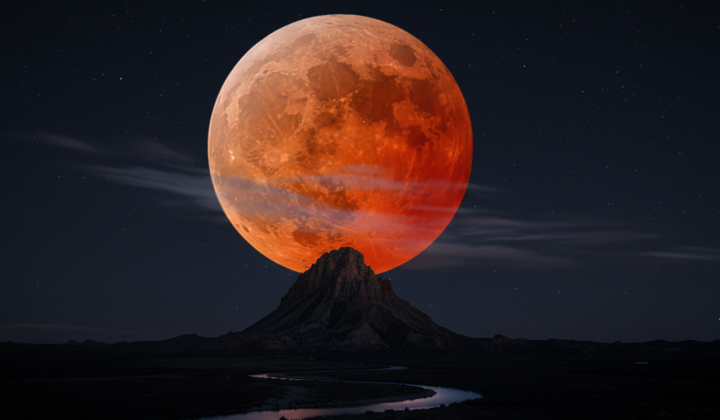
The Total Lunar Eclipse of March 3, 2026
According to Главком: On March 3, 2026, a total lunar eclipse was visible across multiple regions of the globe. This celestial event lasted for approximately 5 hours and 38 minutes, during which the Moon took on a distinctive reddish hue, earning it the moniker 'Blood Moon.' This striking color occurs because sunlight passes through Earth's atmosphere, which filters out blue light and bends red light toward the lunar surface. Such eclipses only happen when the Sun, Earth, and Moon are perfectly aligned.
Observations and Public Reaction
Nearly one-third of the world's population was positioned to view the eclipse in its entirety. The best viewing opportunities were afforded to residents in specific areas:
- United States
- Canada
- Mexico
- Eastern Asia
- Australia
Social media users enthusiastically shared their experiences and photographs. One Instagram user posted a video captured near Grace Cathedral in San Francisco, while another shared an image of the Moon from Oaxaca, Mexico. Photos also emerged from the city of San Ramón in Costa Rica, highlighting the widespread public fascination with this astronomical spectacle.
Consequently, the total lunar eclipse of March 3, 2026, served as a vivid event that connected people from diverse corners of the world, allowing them to enjoy an unforgettable sight.
This eclipse was not merely a scientific occurrence but also a social phenomenon that fostered a sense of shared experience. Astronomical events like total lunar eclipses often spark widespread discussion and the exchange of impressions, underscoring the role of observing natural phenomena in human culture and communication. Such events also encourage public interest in astronomy and science in general.

Read also