Transnistria's Economy Plummets 18% Following Russian Gas Cutoff

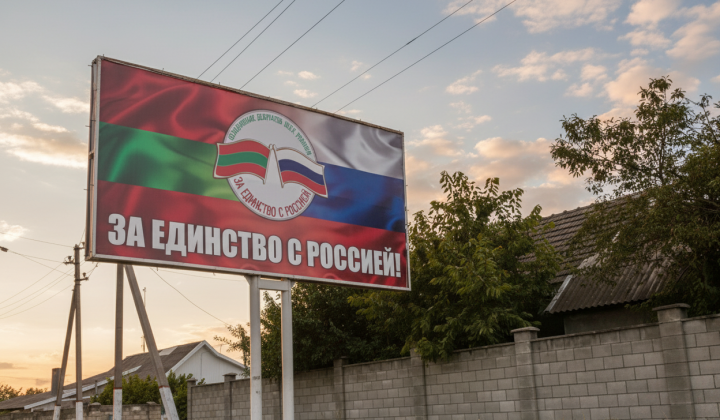
Transnistria's Economic Crisis Deepens
According to Главком: Ukraine's Foreign Intelligence Service reports a severe economic downturn in the breakaway region of Transnistria. This unrecognized territory, which has long relied on external support, is now facing a perfect storm of economic challenges. The primary drivers of the crisis are:
- A sharp decline in both exports and imports;
- A significant drop in industrial output;
- A contraction in Gross Domestic Product (GDP) triggered by the halt of Russian gas supplies;
- A growing budget deficit;
- Delays in salary payments to public sector workers.
The region's exports have collapsed by nearly 60%, while imports have fallen by 24.5%. Industrial production has plummeted by 27.3%, and overall foreign trade has shrunk by 28.5%. Real GDP has contracted by almost 18%. By early 2026, production levels were 20% lower than they were in 2024. In response, the regional authorities in Tiraspol have adopted a new fiscal and tax policy framework for the years 2027-2029.
The payment system is also under severe strain. The government is splitting salaries for public sector employees into installments, causing major delays. For instance, the second part of February wages was not paid until the end of March. In 2025, Transnistria received nearly 690 million cubic meters of gas from Russia, with an estimated market value of around $290 million USD. The company Moldovagaz supplied Tiraspoltransgaz with 689.2 million cubic meters of gas that same year.
The key trigger for the economic collapse was the cessation, starting January 1, 2025, of the supply of effectively free Russian gas transited through Ukraine. According to Ukrainian intelligence, this single event led directly to the 27.3% fall in industrial production, the 28.5% drop in trade, and the near 18% contraction in real GDP.
Dependence on Russian Energy
The situation starkly reveals the region's extreme vulnerability due to its dependence on Russian energy and the fragility of its economic model under conditions of international isolation and its unresolved political status. Russia's own economy is now grappling with significant problems, including sanctions pressure, rising budget expenditures, and structural imbalances, which reduces its capacity to provide financial aid to Transnistria.
This economic crisis underscores the risks for regions heavily reliant on a single external patron, especially during geopolitical shifts. With Russia facing its own economic headwinds, the future of financial support for Transnistria is uncertain. This threatens to exacerbate existing social tensions and economic hardships for a population already suffering from wage arrears and reduced economic activity.
The economic turmoil in Transnistria is further compounded by the broader energy crisis affecting the region. As energy prices are expected to rise again, understanding the implications for both consumers and businesses becomes crucial. For insights on how these fluctuations may impact gas and electricity costs, explore more in our article on the renewed surge in energy prices.

Read also