Russia Is Preparing for a Conflict That Could Last Decades, Says Rosneft Advisor

Forecasts on Russia's State of War
According to Главком: At the St. Petersburg International Economic Forum (SPIEF), Andrey Bezrukov, an advisor to the head of Rosneft, stated that Russia is likely to remain in a prolonged state of war. He emphasized that the country could continue under wartime conditions for several more years, possibly even decades.
'We must acknowledge that for the next few years, and perhaps a couple of decades, we will be at war. It could be a very hot war, like the current one, or a creeping war, even if it shifts to other regions. Two generations will effectively grow up living in a state of war,' Andrey Bezrukov
Kremlin spokesperson Dmitry Peskov also commented on the possibility of ending the war against Ukraine. He noted that the conflict could conclude by the end of the day, but set a condition: Ukrainian forces must withdraw from territories that Russia considers its own. This highlights the ongoing complexity and tension of the situation.
Global Conflicts and Criticism of the Governance System
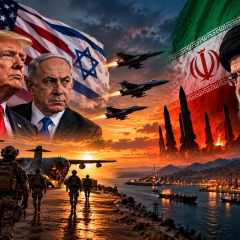
Andrey Bezrukov, a retired colonel of Russia's Foreign Intelligence Service, also addressed global conflicts. He pointed out that 'What happened in Iran proves that the hegemon is no longer the hegemon. But there will be another clash, likely in Asia.' Additionally, Bezrukov warned about potential threats from technological advances in the military sphere, noting that 'all these laboratories around us were not just spending budgets. They were creating weapons of the future. Technology now makes it possible to develop viruses that could destroy us all.'
The New York Times published an article describing Vladimir Putin's system of governance. According to the piece, this 'hyper-personalist system' has reached a chilling equilibrium that serves as a trap for both the dictator himself and Russian society as a whole.
The statements by Andrey Bezrukov and Dmitry Peskov underscore the anxiety within Russia's elite about the country's future, while also reflecting efforts to legitimize prolonged military operations. Given the shifting global political landscape, such remarks may signal internal risks to the stability of the regime and society at large. At the same time, the criticism of Putin's governance system, as highlighted in The New York Times article, could point to growing discontent within the country, which may also influence future developments in Russia and its relations with the international community.
As the situation unfolds, the implications of Russia's prolonged conflict become increasingly clear. The complexities of governance under Putin have led to a scenario where the country finds itself trapped in an ongoing war, raising concerns about the future. To understand how this predicament affects Russia's stability and international relations, explore more about how Putin's regime has created a deadlock that hinders any potential resolution.

Read also