Sharp Decline in Russian Large-Scale Strikes on Ukraine

Institute for the Study of War Report – June 2026
According to Главком: According to the June 2026 report from the Institute for the Study of War (ISW), the frequency of major Russian strikes against Ukraine has notably decreased. Between January and May 2026, Russia conducted large-scale attacks involving more than 300 strike assets each time. The monthly count of these massive assaults was as follows:
- January - 3
- February - 6
- March - 4
- April - 5
- May - 6
However, in June 2026, such large-scale strikes were recorded only twice: on June 2 and June 15.
New Technologies and Tactical Shifts
On July 2, Ukrainian Air Force spokesperson Yuriy Ihnat reported a record number of jet-powered drones used in nighttime attacks. These drones can reach speeds of up to 500 km/h. Serhiy Beskrestnov, an adviser to the Minister of Defense on electronic warfare, noted on June 21 that Russian drones are now operating on a new frequency in the 3900–4100 MHz range. According to Beskrestnov,
“almost all Shahed drones that struck Kyiv tonight operated on this exact frequency”
.
The British International Institute for Strategic Studies (IISS) released an analysis on July 2, documenting 144 instances of Russian drones flying over 13 NATO countries and Ireland between August 2024 and February 2026. The report suggests that since 2024, Russia has likely been using shadow fleet vessels to launch reconnaissance drones, enabling it to conduct operations despite increased NATO surveillance.
On June 30, Ukraine’s Commander-in-Chief Oleksandr Syrskyi stated that Russia has scaled back its plans to form new divisions in its strategic reserve. Earlier, on June 25, Syrskyi had indicated Russia’s intention to create new divisions and five additional brigades in 2026. According to the report, Russia suffered nearly 40,000 military casualties in June 2026.
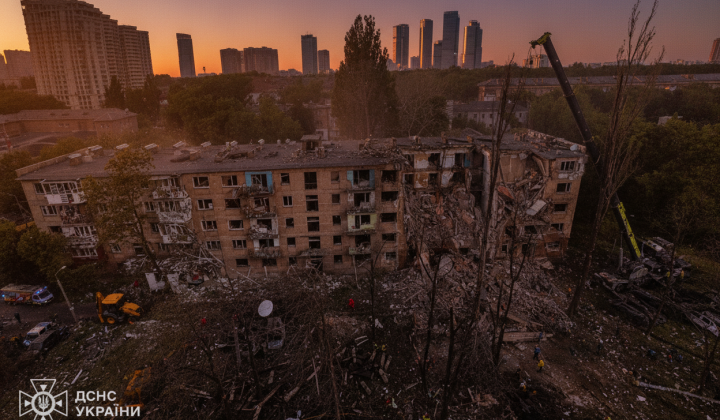
On the night of July 2, Russia launched one of its most extensive strikes against Ukraine, primarily targeting Kyiv. The attack destroyed a Red Cross humanitarian warehouse. As Yuriy Ihnat explained,
“these targets fly too fast for mobile fire groups and interceptor drones”
. This points to a shift in Russian tactics, as they stockpile drones to carry out more frequent large-scale assaults and exhaust Ukraine’s air defenses.
Overall, June 2026 marked a period of strategic change for Russia’s combat operations, including a reduction in the frequency of massive strikes, the introduction of jet-powered drones, and the use of shadow fleet vessels for reconnaissance. At the same time, the scaling back of plans to form new divisions highlights the growing challenges Russia faces in its military campaign.
The recent decline in large-scale strikes has prompted the Ukrainian military to adapt its strategies significantly. As highlighted in a related report, Ukrainian drone forces are planning to isolate Crimea in the near future, which reflects a proactive approach in response to evolving threats and operational changes from Russia. This shift indicates a critical turning point in the conflict dynamics.

Read also