Only One Oreshnik Missile Left: Russia’s Ballistic Arsenal Nearly Depleted

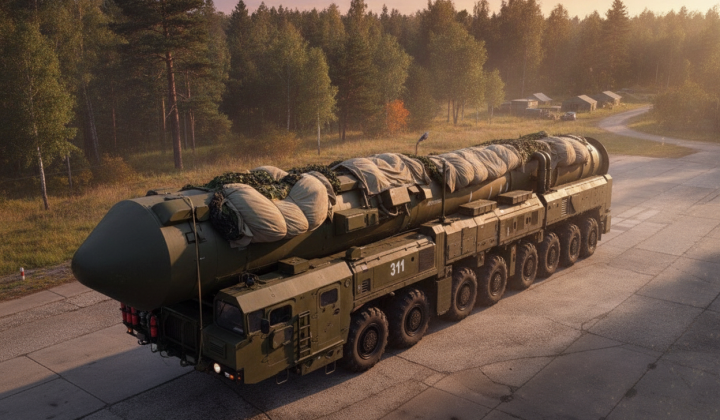
Russia’s Oreshnik Ballistic Missile Program: A Critical Assessment
According to Главком: According to a study by the Institute for the Study of War (ISW), citing Dallas Analytics, Russia now possesses just a single operational Oreshnik intermediate-range ballistic missile (IRBM) from its original procurement batch. The first Oreshnik strike against Ukraine occurred in November, prompting President Vladimir Putin to urgently order the production of four additional missiles by 2025.
The rush to manufacture new missiles resulted in severe quality control failures. Sources within the Russian Ministry of Defense indicate that manufacturers were compelled to bypass all standard quality assurance protocols to meet Putin’s deadlines. These newly built missiles rely on the Soviet-era GU-503 aviation gyroscope, whose unreliability and obsolescence have severely compromised the Oreshnik’s precision guidance. As a consequence, during launches, the missiles deviated by tens of kilometers from their intended targets.
Program Execution and Its Fallout
In 2026, the Russian military fired three of the four missiles produced in 2025. One missile was launched at Lviv on the night of January 9, while two targeted Bila Tserkva in the Kyiv region. One of the missiles aimed at Bila Tserkva instead crashed into temporarily occupied territory in Donetsk Oblast on the night of May 24. This leaves Russia with only one operational missile from the original contract.
Estimates suggest Russia spent tens of millions of dollars on these three Oreshnik strikes against Ukraine. All launches are conducted from the Kapustin Yar test site. The situation surrounding Russia’s Oreshnik ballistic missile program remains dire, with severely limited combat capabilities.
This information highlights the challenges Russia faces in producing and operating ballistic missiles. The loss of quality due to rushed manufacturing and the reliance on outdated technologies jeopardizes the effectiveness of their missile program. This could have significant implications for Russia’s military strategy and its capabilities in the conflict with Ukraine. - Institute for the Study of War (ISW)
The financial implications of Russia's missile program are significant, as recent reports indicate that the country has invested tens of millions of dollars in its Oreshnik missile strikes. This staggering expenditure raises questions about the effectiveness and sustainability of such military operations. For a deeper understanding of how these costs are impacting Russia's military strategy, read more about the financial burden of Oreshnik missile operations.

Read also