A 19th-Century Ukrainian Estate in Kharkiv Region Destroyed by Russian Forces

The Demise of the Donets-Zakharyevsky Estate
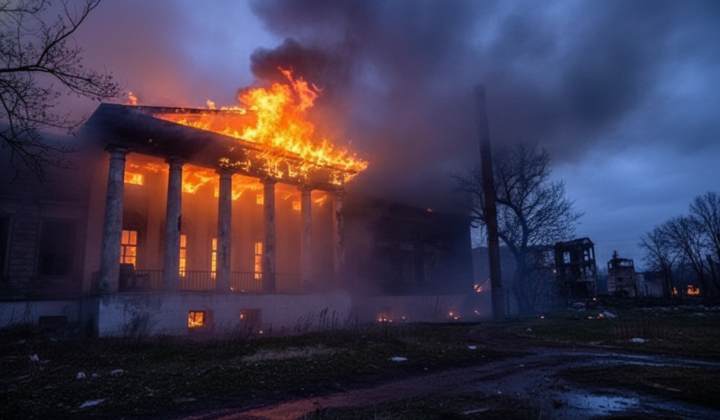
According to Главком: On April 7, 2026, Russian military forces destroyed a 19th-century architectural landmark: the Donets-Zakharyevsky estate in the village of Velykyi Burluk, Kharkiv region. A fire consumed approximately 2,000 square meters of the two-story wooden structure, which was a significant part of the region's historical heritage. This attack is part of a wider pattern of cultural destruction that has characterized the conflict.
Constructed around 1835 in the Classical style, the estate held the status of a local architectural monument (No. 511). It belonged to the Donets-Zakharyevsky family, specifically the Zadonsky branch. Other elements of the complex, including outbuildings and the park, had not survived to the present day.
This 19th-century architectural monument, the Donets-Zakharyevsky estate, built around 1835, survived a turbulent 20th century, two horrific world wars, and the Soviet era with its hostility toward national memory, only to be destroyed on April 7, 2026, by the same barbaric invasion.
Andrii Kanashevych
The estate's destruction represents another devastating blow to Ukraine's cultural heritage, deeply affecting many. Such architectural landmarks serve as vital records of a people's history and identity, making their preservation critically important.
Consequences for Cultural Heritage
This event underscores the severe consequences of the war for Ukraine's cultural legacy. The loss of such architectural monuments signifies not only the destruction of material culture but also strikes a blow against collective memory. Preserving history requires efforts at all levels, and incidents like this raise urgent questions about protecting cultural sites in conflict zones.
The recent destruction of the Donets-Zakharyevsky estate highlights a troubling trend in Ukraine, where cultural heritage sites are increasingly at risk. Similarly, the Rutkovsky House in Kyiv faces potential demolition due to lack of protection, raising further concerns about the preservation of architectural monuments amidst ongoing conflict.

Read also