Fraudsters mask as employers: how to identify a fake job offer with a salary starting from 20000 UAH

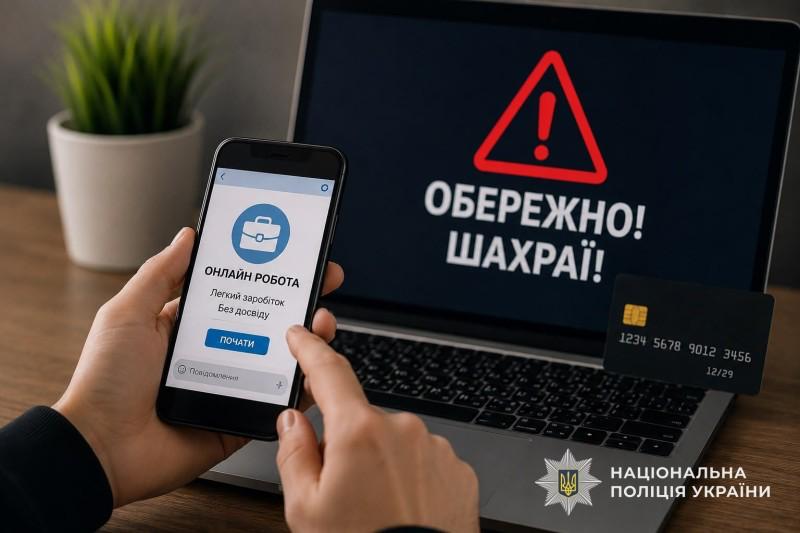
High salary for simple work, urgent responses, and requests to pay even before employment may be part of a fraudulent scheme. The risk increases with the popularity of remote work, and fraudulent income offers are becoming increasingly convincing. This is reported by Informator.
How to identify a fraudulent job offer while job searching in 2026
Malefactors post job offers with attractive salaries and minimal requirements, and after the first contact, they try to obtain personal or banking information. The reason may be supposedly for identity verification or processing future salary.
Be cautious of offers requiring investment of money, purchasing courses, paying for job access, or making insurance payments. A legitimate employer should not require the candidate to pay any money just for the opportunity to get a job.
Key signs of potential fraud:
- the salary is significantly higher than similar offers in the market;
- there is no clear description of duties;
- they require payment for employment or training;
- the company cannot be properly verified online;
- reviews about the employer are mostly negative;
- the candidate is pressured for a decision through calls and messages;
- communication is quickly moved to private messaging.
A particular risk is posed by offers to install unknown software. Such methods are also used in other schemes where fraudsters gain access to smartphones through third-party applications.
How to protect yourself from fraudsters while searching for jobs online
Before replying to a job offer, check the company's name, its official website, social media pages, and employee reviews. If there is almost no information about the employer, it is a reason to be cautious about sharing personal data.
It is dangerous to send your bank card data, PIN codes, passwords, and other information that is not required for an interview to the recruiter. It is also not advisable to transfer money to unknown accounts, even if the candidate received a small payment beforehand to build trust.
Another scheme involves test assignments. The candidate may be asked to prepare a complete text, design, or software code for free, after which communication stops, and the ready work is used.
Artificial intelligence complicates verifying employers: fraudsters can create convincing recruiter profiles, fake reviews, and other content. Therefore, a professionally designed account is no longer sufficient to consider a job offer legitimate.
If money or banking details have already been transferred to fraudsters, you should contact your bank and cyber police as soon as possible. It is worth noting that Ukrainians have also been warned about fake job offers from fraudsters who exploit people's desire to quickly find income.

Read also