One Short Video Demo Is All New AI Model GEN-1.5 Needs to Train Robots for Household Chores

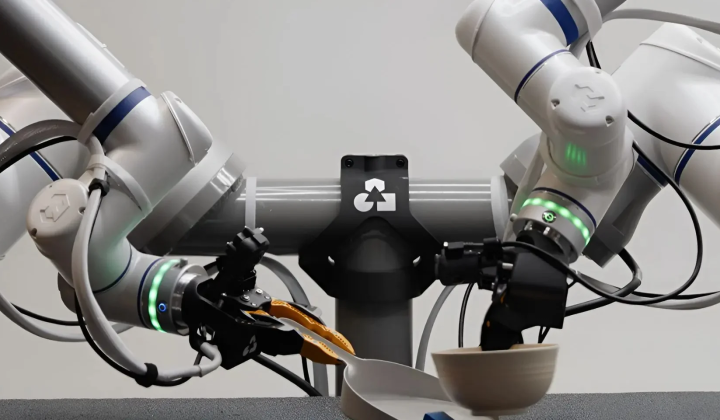
Introducing GEN-1.5: A New AI Model for Teaching Robots
According to НВ — Техно: On August 21 at 16:04, the startup Generalist AI unveiled its latest artificial intelligence model, GEN-1.5. The system can teach robots to perform physical tasks after watching a single human demonstration that lasts anywhere from 3 to 12 seconds. Retraining the robot or adjusting its programming for every new chore is unnecessary; instead, the robot picks up on sensory and visual hints from the person and attempts to imitate what it has just seen.
Performance and Adaptability in Action
In tests involving 10 common household jobs, such as:
- unscrewing jar lids,
- stacking cups,
- unzipping zippers,
- clearing away trash,
the system managed a 59% success rate after just one viewing. When given five extra minutes of data and 10 fine-tuning steps, its performance climbed to 83%. GEN-1.5 processes video, spoken orders, tactile feedback, and body-position information at a rate of 100 Hz.
This model can also merge individual cues into more complex actions, for instance unzipping a pencil case and then taking out money. Developers note that the system adapts to new situations and can think on its feet. As an example, they described a robot that watched a person sweep a surface with a brush; when no brush was available, the robot grabbed a banana and used it as a substitute.
Another key feature is the ability to replicate human hand movements captured on camera, which makes it possible to transfer skills learned in virtual simulations to real-world settings.
The launch of GEN-1.5 shows how far AI technology has come, especially in the fields of robotics and household automation.
Because the system learns without reprogramming, it could open up new ways for robots to assist with everyday routines and reduce the burden of repetitive tasks. That may also have ripple effects on the labor market, particularly in roles that involve physical work, since automation could improve efficiency and cut down on manual effort. For tech observers watching the rapid pace of embodied AI, this kind of breakthrough signals how close we are to robots that ordinary people can train with nothing more than a quick video.
The advancements in AI are not limited to household chores alone. For instance, the recent achievements of the Figure 03 robot, which successfully climbed a ladder without any human assistance, highlight the evolving capabilities of robotic systems. This development further showcases the potential of autonomous machines in various tasks. To learn more about this remarkable feat, check out the full story on the ladder-climbing robot.

Read also