AI in HR: A Framework for Managing Four Critical Risks

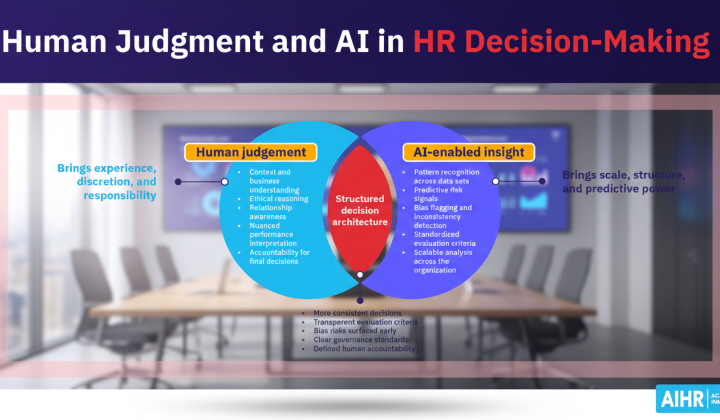
The Rise of AI in Human Resources
According to AIHR: The integration of Artificial Intelligence (AI) into human resources decision-making is accelerating. This shift is transforming the architecture of HR solutions, bringing both significant opportunities and new challenges. Data shows a 60% increase in the use of people analytics within HR functions over the past five years, highlighting the rapid adoption of these technologies. Furthermore, a substantial 74% of organizations report measurable improvements in employee experience as a direct result of using people analytics.
Key Challenges and a Strategic Framework
As companies scale AI in their HR systems, experts identify four primary areas of risk that demand careful management:
- Lack of transparency and explainability
- Maintaining fairness at scale
- Dehumanization of the workplace
- Unclear accountability and responsibility
These risks can profoundly impact both the effectiveness and the ethics of personnel management. As John Rood notes,
“At the most fundamental level, AI ethics is a question of alignment. How do we align the AI systems we build, buy, or use with what we want them to do, and carefully consider how our use of AI impacts other people?”
To navigate these challenges successfully, a practical five-gate decision framework is proposed for AI integration in HR:
- Enhancing human judgment
- Ensuring clear accountability
- Guaranteeing fair outcomes
- Providing clear explanations
- Building and maintaining trust
John Rood emphasizes the critical need for clarity in AI-driven decisions:
“AI systems need to make decisions in ways that are understandable to humans because that’s how we manage bias.”
He also points to a significant regulatory push in this area, stressing the importance of preparing for new norms taking effect soon: “Global organizations really need to start thinking, with all these measures coming into force over the next two years, what is the strategy for getting ahead of this compliance barrier?”
In conclusion, while AI offers powerful new tools for improving talent management, its implementation requires careful consideration of significant ethical and operational risks. As reliance on AI for personnel decisions grows, organizations must strike a deliberate balance between technological innovation and adherence to ethical standards to ensure both effectiveness and fairness in their HR processes. This balance is crucial for maintaining a competitive and equitable workplace.

Read also