A critical orbital-debris threshold has been passed by six satellite constellations

Orbital threat
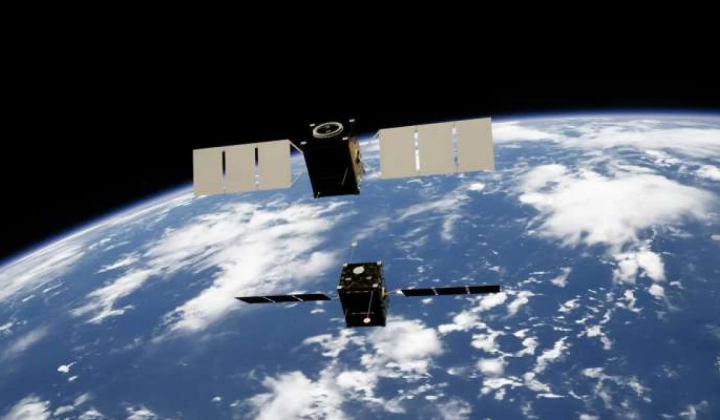
According to НВ — Техно: Satellite fleets may trigger an uncontrollable cascade of debris in orbit. A University of Birmingham study by Hugh Lewis looked at 16 constellations and found that six already exceed the critical threshold for runaway debris accumulation, while another three sit in an unstable band. Roughly 30,000 satellites are currently in orbit around Earth, and regulators have received filings to launch more than a million additional spacecraft. This is a growing concern as commercial mega-constellations continue to expand.
If every planned project goes ahead, the total number of satellites could approach 1.7 million. The paper, preprint identifier arXiv:2607.29644, introduces Lewis's mathematical model for estimating how often satellites and fragments pass through specific parts of space. The model accounts for spacecraft collision-avoidance capability and how quickly decommissioned satellites leave orbit.
Constellation-level analysis
In the analysis of 16 networks, six have already passed the critical point for uncontrolled debris growth, and three more are in a precarious zone. In one case, instability emerged in a network made up of several hundred spacecraft because of their orbital characteristics. A group of small satellites turned into uncontrolled debris because they had no onboard thrusters to steer away from potential impacts.
Existing regulations only address collision risks for individual satellites and ignore the combined hazard posed by entire constellations. The study's author urges immediate tightening of these rules, including:
- increasing atmospheric drag so satellites re-enter Earth's atmosphere sooner;
- extending their operational lifetimes.
The findings underscore how urgent it is to deal with orbital debris, as a growing satellite population could make the environment considerably more dangerous. Current regulations fail to account for the risk arising from large satellite groups, which could raise the chance of collisions and further debris creation. Revising those rules would be a key step toward safer space operations and preserving the near-Earth environment.
The implications of orbital debris extend beyond immediate concerns, as highlighted by recent findings on how spacecraft data may have misled scientists regarding particle motion in radiation belts. Understanding these complex interactions is crucial for developing effective strategies to mitigate the risks posed by increasing satellite populations.

Read also