February's Full Snow Moon: A Celestial Prelude to NASA's Lunar Return

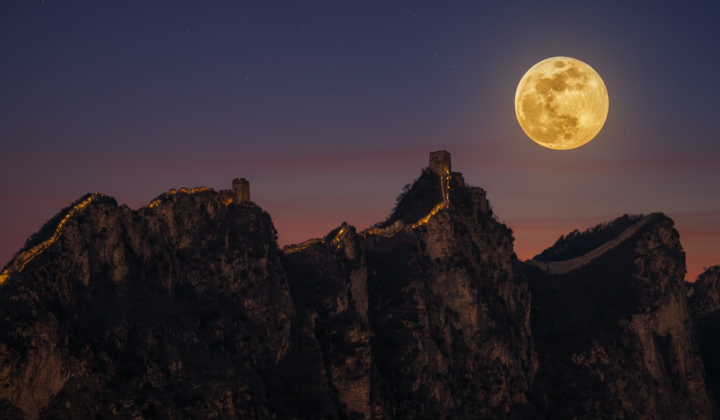
February's Full Snow Moon: A Celestial Prelude to NASA's Lunar Return
According to Главком: The full moon in February is traditionally known as the Snow Moon. This year, observers in Ukraine will have the best view at midnight on February 2nd, offering a chance to enjoy this astronomical event. The Snow Moon is not just a beautiful night sky spectacle; it also coincides with significant new phases in space exploration.
Artemis II Mission and New Frontiers in Space
Simultaneously, NASA is preparing for the critical Artemis II mission, with its launch scheduled for February 6th. This mission is a pivotal step in returning humans to the Moon, with the goal of further studying Earth's satellite. In 2026, the Moon is expected to be positioned approximately 357,000 kilometers from Earth, opening new possibilities for space research.
Noah Petro, project scientist for NASA's Planetary Geology, Geophysics and Geochemistry Lab at the Goddard Space Flight Center, encourages everyone to go outside and observe the Moon in its full phase. He notes:
'Go out and look at the Moon when it's full and when it's partially full, and study its geography. Start learning its features and how the Moon looks in different phases to celebrate the fact that we are going back.' - Noah Petro
Furthermore, the Hubble Space Telescope has captured details of the galaxy NGC 4388, located 60 million light-years from Earth. This discovery underscores the constant progress in astronomy and our ability to explore deep space. The Snow Moon and NASA's Artemis II plans promise new horizons in the study of space and our Solar System.
Observing the Snow Moon offers more than aesthetic pleasure; it highlights the importance of astronomical phenomena for popularizing science. In parallel, the Artemis II mission is a significant milestone in space exploration that could change our understanding of the Moon and its role in the Earth-Sun system. These events encourage greater public interest in astronomy and science in general.
Space exploration and observation of celestial objects remain highly relevant in this era of technological progress. For skywatchers, the full moon is a regular reminder of our cosmic neighborhood, while NASA's ambitious missions aim to take human presence there once again.

Read also