Russia’s Deputy Foreign Minister Denied U.S. Visa for UN Security Council Session

Moscow Raises Alarm Over Visa Denial for UN Representative
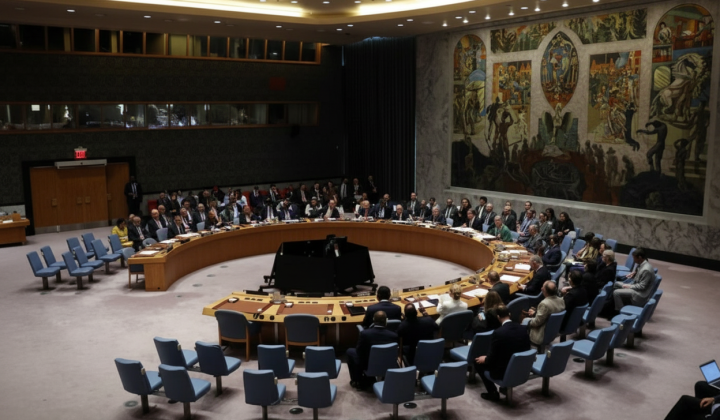
According to Главком: Russia’s UN Ambassador Vassily Nebenzia has voiced deep concern after the United States refused to issue a visa to Alexander Alimov, Russia’s deputy foreign minister. Alimov was set to lead the Russian delegation at a UN Security Council meeting. Nebenzia condemned Washington’s move as a violation of the UN Headquarters Agreement and a direct slight against China’s role as council president.
Security Council Meeting Highlights Tensions
The session focused on issues tied to the UN Charter. Nebenzia accused Western nations of applying double standards, stating that 'the West uses double standards to maintain its dominance.'
He also warned about the troubling re-militarization of Germany and Japan. Chinese Foreign Minister Wang Yi, meanwhile, called for a revision of the UN Charter, arguing that 'the UN Charter must be updated due to rising global instability.'
UN Secretary-General António Guterres noted that the world is currently facing the highest number of conflicts since the organization’s founding. Wang Yi also criticized U.S. actions toward Iran, declaring that
“any unilateral military steps bypassing the Security Council’s mandate are unacceptable”
- Chinese Foreign Minister Wang Yi.
This statement came less than two weeks after U.S. President Donald Trump’s visit to China. Against a backdrop of regional tensions, Tehran accused Washington of violating a nearly seven-week-old ceasefire. U.S. forces conducted airstrikes on targets in southern Iran’s Hormozgan province, describing them as defensive and aimed at missile launch sites and boats. The State Department and the U.S. mission to the UN offered no comments on these events.
These developments highlight deepening international friction, particularly among the U.S., Russia, and China. The visa denial for Russia’s representative underscores the fraught diplomatic dynamics within the UN, where each nation seeks to advance its own interests. Remarks about double standards and the need to update the UN Charter reflect growing unease among member states about the fairness and effectiveness of international norms amid modern conflicts and global instability.
As the geopolitical landscape continues to shift, the recent tensions surrounding the UN Security Council have drawn attention to broader issues, including China's criticism of U.S. actions regarding Iran and the implications of unpaid dues. These developments underscore the complexities of international relations and the potential for escalating conflicts.

Read also