How Iran's Regime Shifted in a Month Following Khamenei's Death

Internal U.S. Debate Over Iran Strategy
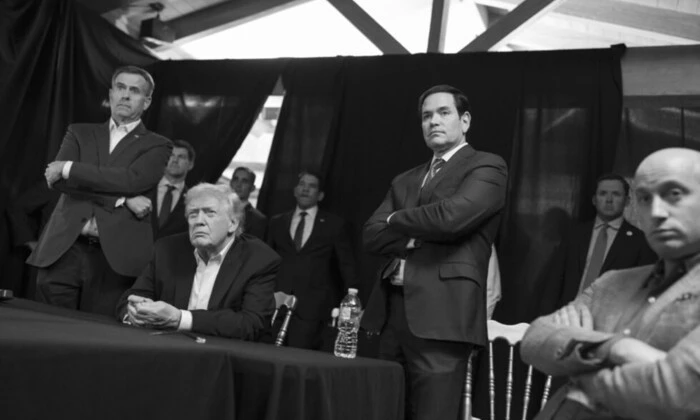
According to Главком: Four weeks into the U.S. military campaign against Iran, divisions have emerged within President Donald Trump's administration over achieving the primary objective of regime change. Key developments include the reported elimination of Supreme Leader Ayatollah Ali Khamenei and the subsequent appointment of his son, Mojtaba, to the position. Despite these events, the U.S. strategy appears focused on applying pressure rather than engineering a complete overhaul of Iran's political system. The U.S. has long viewed Iran's theocratic government as a destabilizing force in the Middle East.
The Military Campaign and Its Aftermath
The military campaign against Iran began on February 28 with initial strikes on the country. Following Khamenei's elimination, his son Mojtaba, who reportedly sustained injuries, ascended to the role of Supreme Leader. Intelligence suggests Mojtaba Khamenei is aligned with the hardline stance of the Islamic Revolutionary Guard Corps, casting doubt on any imminent shift in Iran's foreign policy.
A crucial element in preparing the 'Epic Fury' operation was a phone conversation between Israeli Prime Minister Benjamin Netanyahu and Donald Trump. After Khamenei's death, Trump declared,
"mission accomplished"
and claimed the U.S. had effectively dismantled two Iranian regimes. However, despite these assertions, politicians like Senator Marco Rubio emphasized that
"the problem lies with the clerical system itself, not just specific individuals."
Conversely, Pete Hegseth noted that a 'new regime' is already operating in the country, which he expects to be more prudent than its predecessor. Simultaneously, Caroline Livitt pointed to the 'impossibility of conducting constructive diplomacy with it.' The U.S. continues to exert pressure on several countries, including Iran, Venezuela, and Cuba, highlighting Washington's active foreign policy approach in the region.
These events underscore the complexity of the situation in Iran and the ambiguous nature of U.S. foreign policy. While Khamenei's elimination may be seen as a significant tactical step, the new leader, Mojtaba, is likely to continue his predecessor's hardline policies. The absence of constructive diplomacy and a focus on pressure suggests that even with a change in leadership, regional tensions will remain high and the future unpredictable.
As the situation in Iran evolves following Khamenei's death, the implications for U.S. military strategy are becoming increasingly critical. While President Trump has suggested that military action could soon conclude, analysts are questioning whether the new leadership under Mojtaba Khamenei will yield any significant changes in Iran's approach to foreign relations. This ongoing debate highlights the complexities of achieving lasting stability in the region.

Read also