Why a US-Israeli Plan for Regime Change in Iran Collapsed

Analyzing the Roots of the Middle East Conflict
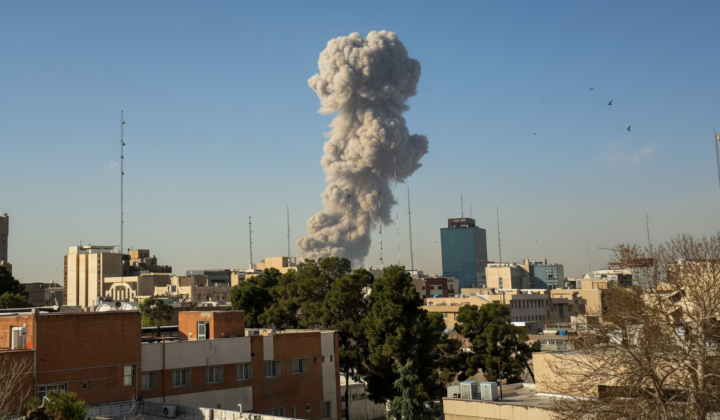
According to ХВИЛЯ: An examination of the current Middle East war points to a failed initial strategy by the United States and Israel, which centered on a plan for rapid regime change in Iran. Economist Oleksiy Kushch, speaking on political analyst Yuriy Romanenko's broadcast, detailed this plan. It called for massive strikes against Iran aimed at decapitating the country's political leadership, including the assassination of Supreme Leader Ali Khamenei.
Kushch stated the plan was to commence with massive strikes on a Saturday, with the expectation that protesting crowds would flood the streets of Tehran by Sunday.
"Essentially, the plan was roughly this: on Saturday, the start of massive strikes on Iran, the elimination of the political leadership, the killing of Khamenei. And on Sunday, crowds of protesters come out onto the streets of Tehran, hundreds of thousands of people," noted expert Oleksiy Kushch.
A Comparison to the Yugoslav Scenario
Kushch also likened this scenario to events in the Balkans in the late 1990s, when President Slobodan Milošević was overthrown. He claimed the situation could have been quickly brought under control by pro-American forces.
"A kind of Yugoslav scenario is taking place, where Milošević was overthrown and pro-American forces come to power, and the situation is brought under control very quickly," he added.
By Monday, following the anticipated events, the holiday of Purim was to be celebrated, adding a layer of symbolism to the plan. In Israel, there were jokes about the possibility of 'eating Haman's ears,' with Haman being a reference to Khamenei. However, the real situation unfolded along a different path. 'The situation, as we see, has gone according to a completely different scenario,' Kushch summarized.
Thus, in the economist's view, it is already possible to assert that Republican political elites have, through this war, effectively destroyed their chances of success in the autumn elections. 'In my opinion, the Republican political elites have practically killed their chances in the autumn elections with this war,' he stated.
The war in the Middle East has serious consequences not only for the region but also for the political situation in the United States. This conflict is unfolding against a backdrop of intense domestic political polarization in America. The loss of support for Republican elites in the context of the war could impact the results of upcoming elections, as voters often react to foreign policy failures. The repercussions of this conflict may become a significant factor in shaping the U.S. political landscape, especially given the growing competition between the Democratic and Republican parties.

Read also