Post-Khamenei Iran: The Aftermath of a 2026 U.S.-Israeli Military Campaign

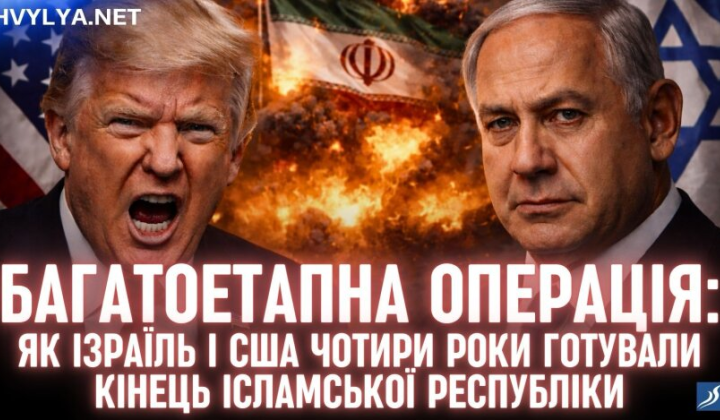
Analysis of the Iranian Situation
According to ХВИЛЯ: A U.S.-Israeli military operation in February 2026 has triggered a profound shift in Iran's political landscape. This campaign was a response to major unrest, initially sparked by the 2022 killing of Mahsa Amini and reignited by nationwide protests in January 2026. The operation, originally slated for summer 2026, was accelerated, demonstrating the Iranian populace's readiness for change, according to Maziar Mian, an Iranian analyst based in Ukraine.
On February 28, 2026, American and Israeli aircraft began striking targets within Iran. A major achievement on the first day was the elimination of Supreme Leader Ali Khamenei. Mian noted that this has led to a fragmentation of power, stating,
"Now various generals in different places are doing as they please"
, indicating the regime's loss of control. Real authority is now concentrated in the hands of Mojtaba Khamenei, Ali Larijani, and Baqer Qalibaf.
Protests and the Military Campaign
Protests that erupted on January 8, 2026, spread across all of Iran. As people took to the streets, the national internet was completely shut down. According to available data, the regime killed over 30,000 people during this period, including in events in Tehran and the provinces of Ilam, Lorestan, and Sistan and Baluchestan, as well as in the city of Abdanan. Mian observed that
"the call for people to take to the streets was very well and positively received. People listened and came out."
The military campaign consists of three phases:
- Neutralizing proxy networks, dismantling Hezbollah in Lebanon, and degrading Hamas's military capability in Gaza;
- Destroying Iran's indigenous military potential, including its missile program and naval fleet;
- Striking the internal security apparatus, specifically headquarters of the Islamic Revolutionary Guard Corps and police stations.
Mian added that
"yesterday there were strikes on several state sports complexes" where "security forces were hiding."
Prince Reza Pahlavi, who visited Israel in 2023 and met with Netanyahu, actively supports these changes in Iran. A video address he published on January 6, 2026, garnered over 90 million views. Mian cautioned that 'nothing will come of this' without a strategic approach to managing the situation. However, in the long term, he suggested that 'Ukraine will gain an ally instead of an enemy.' This potential realignment could significantly impact regional geopolitics.
The military actions have caused severe destruction; Mian pointed out that 'the fleet was completely sunk,' highlighting the scale of the losses. China, which receives 80% of Iran's oil via the Strait of Hormuz, could influence the conflict's duration. Mian remarked that 'no one benefits' from a prolonged war, as it risks destabilizing global energy markets.
The situation in Iran remains tense, and its future trajectory depends on the actions of both the Iranian population and international actors, chiefly the U.S. and Israel. The U.S.-Israeli operation opens a new chapter in Iran's history, marked by deep political upheaval. The protests, fueled by the regime's brutal actions, underscore public dissatisfaction and a readiness for change. Key factors influencing the outcome will be international relations-particularly China's role as a major energy consumer-and Iran's internal political dynamics, which will ultimately determine the country's future course.

Read also