What is a People Strategy and How It Transforms Employee Management

Redefining HR: The Shift to a People-First Strategy
According to AIHR: The concept of a 'people strategy' is now a critical component of modern organizational management. This forward-looking framework outlines an organization's commitments to both candidates and employees, directly linking talent needs to core business objectives. It represents a significant evolution from traditional, function-focused HR strategy. A recent study underscores this shift, revealing that 72% of surveyed HR professionals and managers agree today's workforce has higher expectations of their employers than ever before.
The Critical Role of Culture and Strategic Implementation
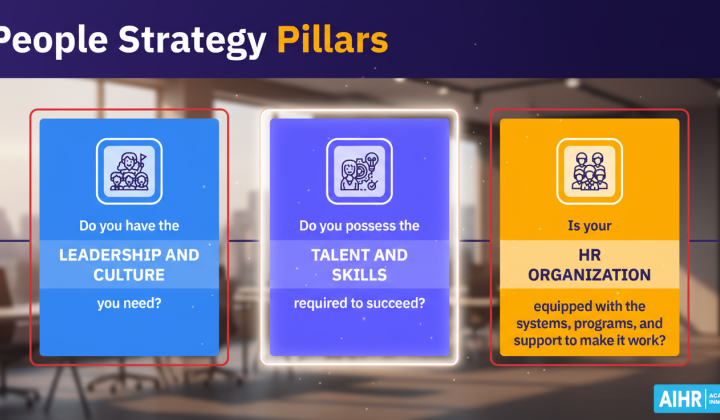
Corporate culture is a major factor in employee retention. According to the Mercer Global Talent Trends report, it ranks as the third most important element for workers, following only workplace safety and fair compensation. This highlights how vital it is for companies to cultivate a positive, supportive culture. The Boston Consulting Group identifies three core pillars of an effective people strategy:
- Leadership and Culture,
- Talent and Skills,
- HR Operations.
Companies implement their people strategies in diverse ways. Notable examples include global firms like Adidas and Cisco, as well as institutions like the City of London and innovative companies such as Spotify and Albatross Group, all of which have pioneered successful, tailored approaches to talent management. Developing a robust people strategy typically involves a five-step process:
- First, assess the broader business landscape and context;
- Second, conduct an audit of current practices and define clear people goals;
- Third, prioritize the most critical focus areas;
- Fourth, create clear communications and content for all stakeholders;
- Finally, continuously measure, review, and adapt the strategy in response to environmental changes.
In today's dynamic job market, a well-defined people strategy is no longer a luxury but a necessity for attracting and retaining top talent. By fundamentally reshaping how a company approaches its workforce, a people strategy becomes a key driver of competitive advantage. The success of early adopters demonstrates that an innovative, employee-centric approach allows organizations to adapt to new challenges and maintain their edge.
Ultimately, a people strategy does more than just modernize HR practices; it positions employee experience as a central pillar of business success. Focusing on culture and meeting employee needs can significantly boost productivity and retention, proving that a strategic investment in people is an investment in the organization's future resilience and performance.

Read also