Becoming a Strategic Business Partner: The Essential Role of HR

The Rise of Strategic HR
According to AIHR: In today's dynamic business world, the ability to think strategically has become a critical requirement for Human Resources professionals. This involves not just planning but also adapting to shifting conditions to manage human capital effectively. A clear indicator of this shift is that workforce planning has recently jumped from sixth to third place in the list of top priorities for HR leaders, highlighting the growing recognition of a strategic approach to people management.
Core Competencies and Disciplines of Strategic Thinking
What defines strategic thinking? It is a process that enables HR specialists to move beyond solving immediate issues and instead plan for the future in alignment with overarching business objectives. Its importance lies in the fact that HR strategies built on deep analysis and forecasting can significantly influence an organization's overall success.
Six key competencies underpin strategic thinking:
- Big-picture perspective
- Pattern recognition
- Intellectual curiosity and questioning
- Comfort with ambiguity
- Prioritization and trade-off management
- Business acumen
Each of these plays a vital role in shaping effective HR strategy.
Furthermore, specific strategic thinking disciplines can be applied within HR, including:
- Problem framing
- Systems thinking
- Inductive reasoning
- Persistent inquiry
- Vision and strategic action
Together, these elements create a robust framework for strategic planning in the people function.
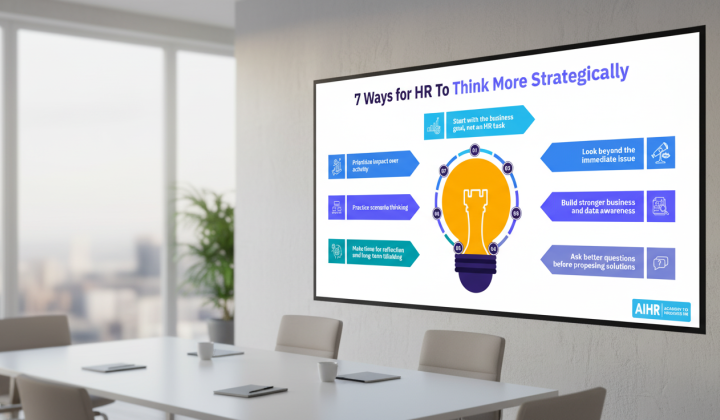
HR professionals can cultivate this mindset through seven practical approaches:
- Start with the business goal, not the HR task
- Look beyond the immediate problem to develop stronger business and data awareness
- Ask better questions before proposing solutions
- Carve out time for reflection and long-term thinking
- Practice scenario planning
- Prioritize impact over mere activity
Practical applications of strategic thinking in HR encompass areas like learning and development, employee retention, succession planning, and change management. These examples show how a strategic mindset can be implemented to enhance the effectiveness of HR initiatives. For global companies, this shift is essential to navigate complex talent markets and digital transformation.
In conclusion, strategic thinking is an indispensable component of successful human resource management. Acknowledging its value and implementing strategic approaches will help HR leaders adapt to a changing business landscape and achieve their goals. Given the rapid pace of economic and technological change, the importance of strategic thinking for HR practitioners continues to grow. Organizations that successfully adapt their people strategies to meet new challenges will gain a competitive edge, making investment in the strategic competencies of HR leaders crucial for ensuring sustainable business growth and success.
As organizations increasingly recognize the importance of aligning HR strategies with business objectives, understanding how to develop essential business knowledge becomes crucial. This shift not only enhances HR's role but also empowers professionals to contribute more effectively to their organizations. For insights on how to cultivate this vital skill set and become a more effective strategic partner, explore our article on developing business acumen in HR.

Read also