Uranus's Moons Were Destroyed and Reborn Twice

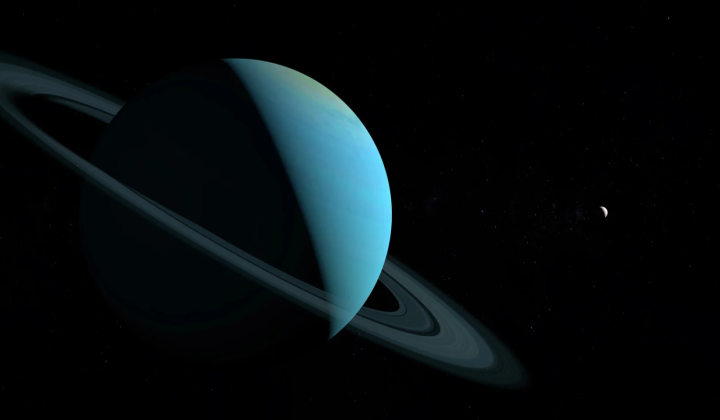
Exploring the Moons of Uranus
According to НВ — Техно: Collisions and the migration of giant planets may have caused Uranus's moons to be shattered and re-formed on two separate occasions. These findings, accepted for publication in the journal Icarus, underscore the study's significance for understanding the evolution of our solar system. The research revealed that Uranus's unusual orientation-it rotates nearly on its side-resulted from a massive collision early in its formation. The planet's moons mirror this tilt, further supporting that theory.
Why Uranus's Original Moons Were Destroyed
The first destruction of Uranus's original moons stemmed from that same massive early collision. A second catastrophic event occurred later, when the giant planets were settling into their current orbits. In the early solar system, these planets were positioned closer together before undergoing a dramatic migration. Jupiter and Saturn swapped places, while Uranus and Neptune were pushed farther from the Sun. Matthew Clement from the Johns Hopkins University Applied Physics Laboratory, along with other scientists from various U.S. universities, ran nearly 10,000 computer simulations. From these, 122 scenarios were selected that resulted in the familiar structure of the solar system.
The study also found that the large moons of Jupiter and Uranus survived in fewer than 15% of cases. Oberon, the outermost major moon of Uranus, orbits at a distance of about 580,000 kilometers from the planet. If another giant planet came within 3 million kilometers of Uranus, local objects were doomed by gravitational forces. After impacts, these space bodies turned into debris clouds, which later coalesced again under gravity. Today's Uranian moons are descendants of these re-formed objects, including Miranda-an icy satellite that contains significantly less rock than the other moons.
In this way, the research provides fresh insights into the evolution and origin of Uranus's moons, confirming theories about the role of collisions and giant-planet migration in shaping our solar system.
These discoveries could significantly change our understanding of planetary system dynamics and moon evolution. - Matthew Clement
The work conducted by the scientists highlights the importance of computer simulations for modeling the history of the solar system, which in turn could aid in studying other star systems and their planets. Understanding the mechanisms that led to the formation of Uranus's modern moons may also shed light on general processes of planetary evolution in space.
Understanding the complex dynamics of celestial bodies can illuminate the potential for life beyond our solar system. Recent research has highlighted that moons around rogue planets may harbor liquid oceans for billions of years, providing a fascinating comparison to the evolution of Uranus's moons. This connection underscores the broader implications of planetary migration and collisions in shaping environments that could support life.

Read also