Hubble and James Webb Telescopes Discover 27 New Icy Bodies at Solar System's Edge

Exploring Trans-Neptunian Objects
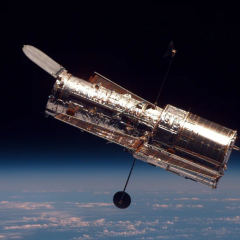
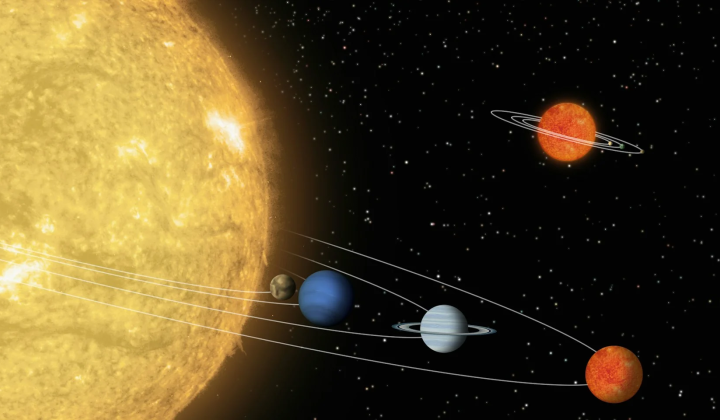
According to НВ — Техно: Using the Hubble and James Webb telescopes, astronomers have identified 27 previously unknown icy objects located beyond Neptune, in the distant outskirts of our Solar System. These bodies exhibit distinctive traits suggesting they have preserved their original characteristics for billions of years. The discovery challenges current models of planetary formation.
The study focused on two categories of trans-Neptunian objects:
- Dynamically cold objects: These orbit close to the plane of the planets and likely remain near their formation sites.
- Dynamically hot objects: Featuring elongated orbits caused by gravitational interactions with the giant planets, indicating they have migrated from their initial locations.
Both groups share similarities in color and size distribution. The smallest detected object measures about 5 kilometers in diameter. Data were gathered using Hubble's visible light capabilities alongside the James Webb telescope's infrared observations. Notably, fewer small objects were found than some theoretical predictions suggested, and the surfaces of these icy bodies appear less altered by collisions than expected. This implies these objects have retained a unique chemical signature from the early Solar System.
Significance of the Findings
Published on November 2 by research teams from Canada and the United States, these findings offer crucial insights into the processes that shaped planetesimals within the young protoplanetary disk.
“Discovering new trans-Neptunian objects marks a pivotal advance in understanding Solar System evolution.” – Anonymous Source
Because these icy bodies maintain features characteristic of the Solar System's formation stage, this research may prompt a reevaluation of existing planet formation theories and enhance our grasp of the mechanisms that influence the creation of celestial bodies. The discovery also highlights how cutting-edge astronomical instruments are expanding our comprehension of the cosmos.
In addition to these groundbreaking findings on trans-Neptunian objects, the James Webb Telescope continues to reveal fascinating details about our universe. For instance, recent observations have uncovered intriguing characteristics of the interstellar comet 3I/ATLAS and the dense atmosphere of exoplanet TOI-561 b. To explore these remarkable discoveries further, you can read more about them here.

Read also