T. rex’s Body Temperature Mirrored That of Humans, Around 36°C

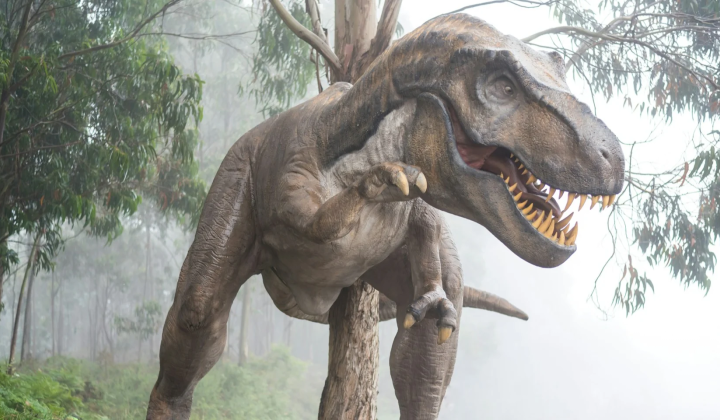
Warm-Blooded Giant: New Research Reveals T. rex Had a Body Temperature Comparable to Humans
According to НВ — Техно: Scientists at the University of California, Los Angeles have, for the first time, accurately estimated the body temperature of Tyrannosaurus rex by analyzing isotope ratios in its tooth enamel. Their findings indicate that this prehistoric predator maintained a body temperature close to 36°C, remarkably similar to that of modern humans. This suggests T. rex possessed a high metabolic rate and a capacity to withstand colder climates, setting it apart from today’s cold-blooded reptiles and birds.
The study focused on a T. rex tooth dating back 66 million years, examined by researchers Randy Flores and Robert Eagle. The temperature assessment technique, developed by UCLA scientists, utilized tooth fragments named Thomas, which were obtained with permission from the Natural History Museum of Los Angeles County.
Comparing Body Temperatures Across Species
Modern cold-blooded reptiles typically have body temperatures ranging from 28 to 30°C, while birds maintain higher temperatures between 40 and 43°C. To validate their method, researchers compared the T. rex data with fossil crocodile teeth from the Hell Creek Formation in Montana, which showed a body temperature of approximately 30°C. This breakthrough sheds new light on the biology of T. rex, a subject that has puzzled scientists for over a century relying on bones and footprints.
Discoveries from Alaska further support the idea that T. rex could endure colder environments, enriching our understanding of this formidable dinosaur’s adaptability. The study’s results were published in the journal Science Advances, highlighting the significance of ongoing scientific inquiry into extinct species.
Understanding T. rex’s body temperature offers valuable insights into dinosaur evolution and physiology. It challenges previous assumptions about their lifestyle and ecological roles, suggesting these giants employed advanced metabolic strategies to survive in fluctuating climates. This research not only advances paleontology but also opens new avenues for exploring evolutionary biology.
As researchers continue to unveil the mysteries of prehistoric life, the recent discovery of over 250 titanosaur eggs in Southern Patagonia, dating back 66 million years, adds another layer to our understanding of these ancient creatures. This finding not only highlights the reproductive habits of giant dinosaurs but also complements the insights gained from studies like the one on T. rex's body temperature. For more on this fascinating discovery, check out the full report on titanosaurs' nesting behaviors.

Read also