What $450 Million Buys a Fusion Startup: Faster Capsule Production at Inertia

Fusion Money in Motion
According to НВ — Техно: August 21, 09:32 - Inertia Enterprises, a fusion startup, has closed a $450 million investment round to bring National Ignition Facility (NIF) fusion capsule technology to the market. The company says it has dramatically accelerated production: the crystalline layer now forms in just 30 minutes, down from a full week. This is a major breakthrough because the capsules are essential for triggering fusion ignition.
Inertia's Technology and Strategy
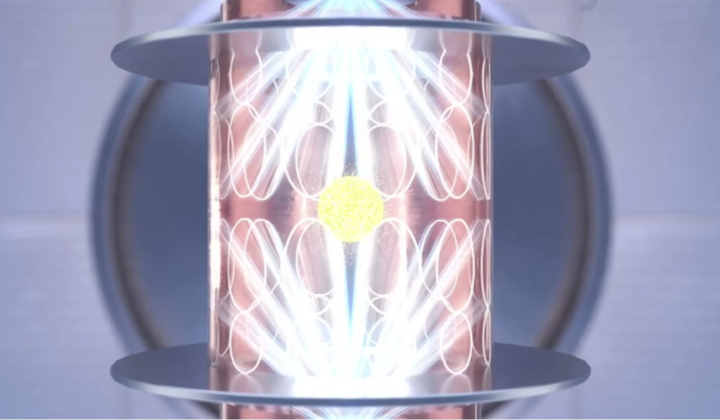
Each capsule is a spherical diamond shell with a thin layer of frozen deuterium and tritium sitting just beneath the surface. Inside that is a gas made from the same two isotopes. Every layer must be perfectly spherical, because even slight flaws can derail ignition. The crystal-layer method was developed together with Lawrence Livermore National Laboratory.
Annie Kritcher, one of the founders, was behind the first NIF experiment to produce more energy than it consumed. Inertia is planning to build a laser four times more powerful than the one currently used at NIF, giving the team extra room to experiment. A full-scale Inertia facility would need to burn through ten capsules every second - a sign of how large the company is aiming.
We deliberately have a lot of margin built in. The strategy is to make our driver - our laser - over-powered so we have plenty of flexibility everywhere else in the system.
Jeff Lawson, co-founder
One major hurdle remains tritium, a key ingredient that costs about $30,000 per gram. Only 25 kilograms of this isotope exist worldwide.
What Inertia is developing could push fusion energy toward commercial reality. Fusion is widely viewed as a potentially endless source of clean power, and a practical version of it could transform the global energy landscape. But with limited tritium stockpiles and high production costs, continued research and investment are still necessary. If Inertia succeeds, it may encourage other firms to pursue similar technologies, which would have broad implications for energy policy and environmental initiatives.
As Inertia Enterprises pushes forward with its ambitious plans for fusion energy, it's worth noting that other innovative energy solutions are also emerging. For instance, Bill Gates' nuclear initiative aims to power AI data centers, highlighting the diverse approaches being taken to address the global energy challenge. Such advancements in nuclear and fusion technologies could play a crucial role in shaping a sustainable energy future.

Read also